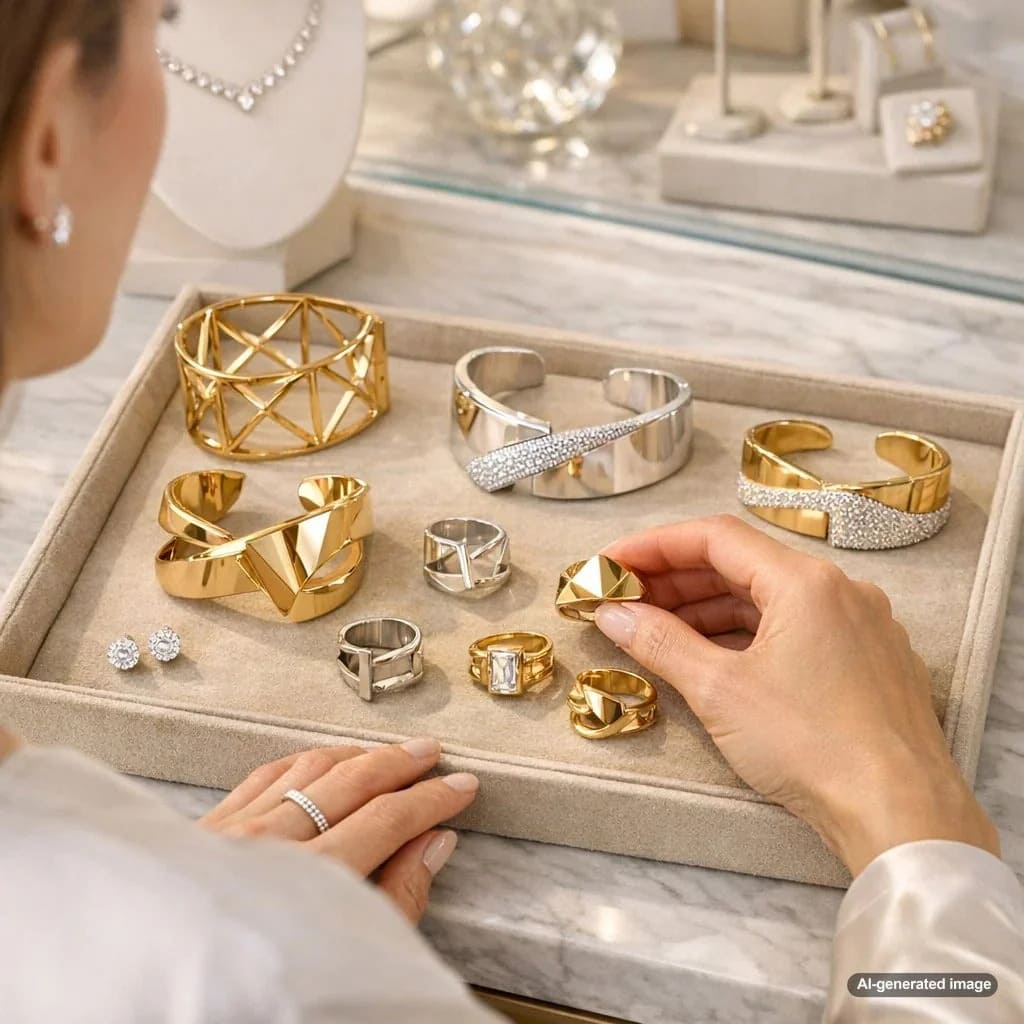
Jewelry influences personal style in ways that often go beyond color or ornamentation. The proportions of a ring, the placement of a gemstone, and the shape of a bracelet can all affect how an accessory interacts with an outfit. Even relatively simple pieces can create a distinctive impression when their forms and details are considered carefully.
Gold jewelry offers particular versatility because it can work with both understated and elaborate designs. Its appearance changes depending on the finish, setting, and surrounding materials, making it suitable for a wide range of personal styles. Understanding the relationship between these design elements reveals why some jewelry combinations feel balanced while others appear visually crowded.
Why Proportion Matters in Jewelry Design
Proportion is one of the most important considerations when selecting jewelry. A piece does not need to be large or elaborate to attract attention; its relationship with other accessories often determines how noticeable it becomes.
A broad ring creates a different impression from a narrow band, even when both feature similar gold finishes. Similarly, a bracelet with a substantial profile can become a focal point, while a delicate chain bracelet may contribute a quieter detail.
The proportions of jewelry can also influence how it complements clothing. Structured outfits may work well with accessories featuring defined shapes, while softer fabrics and flowing silhouettes can pair naturally with more delicate designs. These are not strict rules, but they illustrate how the scale of an accessory can contribute to the overall appearance.
The Role of Gemstones in Shaping Gold Jewelry
Gemstones introduce another dimension to jewelry design. Their color, cut, and placement influence how a piece catches light and where the eye is naturally drawn. A centrally positioned stone creates a clear focal point, while several smaller stones can produce a more distributed pattern of detail.
The surrounding metal also affects the visual result. Gold can frame a gemstone with a warm contrast, while the setting determines how prominently the stone sits within the design. Raised settings create additional dimension, whereas lower-profile arrangements can produce a more integrated appearance.
The balance between metal and gemstone is particularly important. A large stone may dominate a delicate design, while a smaller accent can introduce interest without overwhelming the overall form. The most suitable arrangement depends on the intended aesthetic rather than the size of the gemstone alone.
Understanding the Design of Gold Rings for Women
Rings offer a useful example of how small differences in proportion can change the character of jewelry. A simple band creates a continuous line around the finger, while a ring featuring a gemstone introduces a focal point. Textured surfaces, decorative settings, and variations in band width provide further opportunities to distinguish one design from another.
When considering a gold stone ring for women, it is worth looking beyond the gemstone itself. The shape of the setting, the width of the band, and the relationship between the stone and the surrounding gold all contribute to the finished appearance.
For example, a centrally placed gemstone can create a balanced, symmetrical design, while an asymmetrical arrangement may produce a more contemporary impression. A slim band can emphasize the stone, whereas a broader band gives the ring a more substantial presence.
These details also influence how a ring works alongside other accessories. A distinctive gemstone ring may be enough to establish the overall look, while a more understated design can be combined with other jewelry without creating excessive visual competition.
How Bracelets Introduce Movement and Continuity
Unlike rings, which occupy a relatively small area, bracelets follow the movement of the wrist and can introduce a different kind of visual interest. Their shape, length, and construction influence how they sit against the skin and interact with sleeves.
A chain bracelet creates a flexible line, while a rigid bangle maintains a more defined circular form. Designs featuring multiple elements can introduce texture and variation, whereas simpler bracelets rely on their proportions and finish for their appeal.
When exploring a gold bracelet for women, consider how its construction relates to the rest of the jewelry being worn. A delicate bracelet can complement a detailed ring without competing for attention. A wider bangle, by contrast, can establish a stronger visual presence when paired with simpler accessories.
The relationship between the two pieces matters more than matching every detail. Rings and bracelets can share a gold finish while differing in shape, texture, or decorative elements, creating a coordinated appearance without looking identical.
Creating Contrast Without Losing Balance
Contrast is an important part of contemporary jewelry styling. Combining different shapes, finishes, and proportions can make an arrangement more interesting, provided the pieces retain some visual connection.
For example, a polished gold ring can be paired with a bracelet featuring a more textured surface. The contrast allows each piece to remain distinct while the shared metal tone creates continuity. Similarly, a gemstone ring can provide color and detail alongside a relatively simple bracelet.
The amount of contrast also influences the final result. Several elaborate pieces worn together may compete for attention, while a combination of one prominent accessory and simpler supporting pieces can create a clearer visual hierarchy.
Rather than attempting to make every accessory equally noticeable, consider which piece should lead the arrangement and which pieces should complement it.
Matching Jewelry to Different Occasions
The architecture of jewelry becomes particularly apparent when considering how accessories work across different settings. Everyday jewelry often benefits from comfortable proportions and designs that integrate easily with regular clothing. More formal occasions may provide opportunities to wear distinctive gemstone settings, sculptural bracelets, or combinations with greater visual detail.
This does not mean certain designs must be reserved for specific occasions. A bold ring can work with a simple daytime outfit, while an understated bracelet can complement formal clothing. The key consideration is how the jewelry relates to the overall styling rather than whether it follows a conventional dress code.
Practical details matter as well. Ring fit, bracelet fastening, and the way accessories sit against clothing can influence comfort throughout the day. Jewelry that feels comfortable and secure is generally easier to incorporate into regular wear.
Gold Jewelry as an Expression of Individual Style
Personal style develops through the details people choose to emphasize. Some prefer clean lines, minimal decoration, and consistent finishes. Others are drawn to gemstones, layered accessories, and contrasting forms. Gold jewelry can accommodate both approaches because its appearance varies considerably across different designs.
A coordinated combination does not necessarily require matching pieces. Instead, a shared element such as metal color, finish, or design inspiration can connect accessories that differ in other ways.
Over time, these preferences can help establish a recognizable personal style. Rather than following every emerging trend, selecting jewelry according to proportion, comfort, and individual taste can make accessories feel more considered and versatile.
Conclusion
The architecture of gold jewelry lies in the relationship between its individual design elements. Proportion influences visual weight, gemstones establish focal points, and the shapes of rings and bracelets determine how accessories interact with one another.
Understanding these relationships makes it easier to create combinations that feel balanced without becoming predictable. Whether the preference is for a gemstone ring, a delicate bracelet, or a contrast between different jewelry forms, thoughtful selection allows each piece to contribute to a cohesive personal style.




Be First to Comment