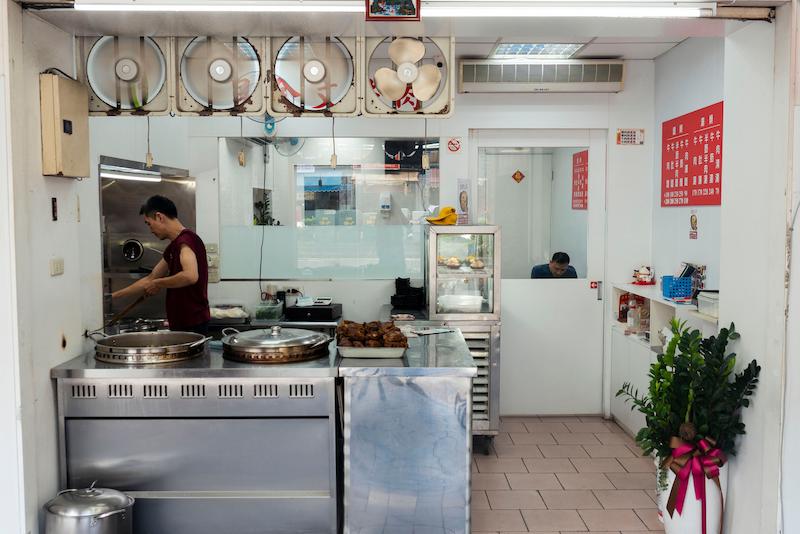
A central kitchen may need to replace an electrostatic collector while retaining its existing fan, odor modules and building controls. Another brand appears on the contractor’s quotation. Its cabinet size and airflow label resemble the outgoing unit, but those similarities are only a starting point: they do not show how the replacement will interact with the controls and treatment stages that stay in place. Fit does not establish compatibility.
Functional compatibility is the buyer’s real problem. A proposed kitchen ESP must perform its assigned particle-treatment job and work with the retained installation. Polygee’s LK-E engineering range is useful for examining this decision because it is presented as a modular duct component, with separate collecting cells, electrical functions and downstream treatment options. Approval should depend on documented interfaces and an agreed acceptance scope, not visual resemblance to the outgoing unit.
Define what the replacement is allowed to change
Polygee’s kitchen ESP range includes packaged in-duct units, engineering electrostatic modules and integrated exhaust hoods, alongside UV-C and activated carbon options. These forms imply different replacement scopes. An offer for an engineering module should not silently become an offer to replace the hood or the complete treatment assembly.
Start with the actual project boundary. Identify the component being removed, the assets being retained and any function that the old assembly performed beyond particle collection. An existing cabinet may contain connections or controls that are easy to overlook in a photograph. Ask the incumbent service provider for the installed arrangement and ask the replacement supplier to respond to that arrangement explicitly.
For a central kitchen, a useful request states whether the fan, upstream capture arrangement, UV-C chamber, carbon cabinet and control panel remain. It also identifies who may approve a necessary change to those retained assets. This is a purchasing decision about scope, not permission for the installer to assume that every surrounding component will work unchanged.
Consider a supplier offering a cleaner installation by removing an old control enclosure. That may be reasonable, but the contractor should identify what the enclosure currently does before agreeing. A proposed simplification is only an improvement if the required functions survive it.
Match the electrostatic function before the cabinet outline
The LK-E series uses separate ionization and collection zones in a plate-type electrostatic field, powered by an SPP high-voltage supply. Its drawer-style collector cells are removable for cleaning. Polygee presents the range as an engineering component that can be combined with downstream treatment modules, rather than as proof that any existing treatment train will accept it.
Ask how the proposed collector was selected. Its selection must address the cooking duty and extract flow, with the supplier identifying the relevant assumptions rather than simply copying the airflow printed on an outgoing cabinet whose nominal capacity may no longer describe the kitchen’s requirements.
Keep removal evidence attached to its test conditions and model. A design efficiency or a test on another assembly should not become an installed-performance guarantee through a quotation’s wording. Specify the particle-treatment objective in the proposal, alongside a practical method for evaluating it within the agreed project scope.
Physical fit remains necessary, but it comes after this functional question. A fabricated transition can join different flange sizes; it cannot establish treatment performance. Likewise, preserving the original footprint says little about whether the new collector can be serviced without dismantling retained equipment. Ask for the proposed service operation as well as the installed outline.
Trace electrical and control functions across the change
Polygee specifies a 220 V, 50 Hz supply for the LK-E range and describes work, clean and fault indicator ports on the SPP supply, along with a building-management interface port. That published availability is useful when developing a control proposal, but it does not by itself define a communications protocol or prove compatibility with a central kitchen’s existing control panel.
Request connection details for the actual supplied model. The electrical contractor should distinguish power requirements from signals, identify what each interface communicates and confirm any additional hardware or programming needed. An existing cable at the replacement location is not evidence that its electrical characteristics or intended function match the new terminal.
Check the operating sequence as well. Who commands the collector to run? What should the building system display when a fault occurs? Which conditions require a service response? Have the responsible designers agree on the required behavior before anyone quotes interface compatibility as settled. Do not infer a fan shutdown, alarm action or remote reset from the mere presence of an interface port.
For acceptance, ask the contractor to demonstrate the agreed signals through the actual receiving system. An indicator working locally on the collector does not establish that the facilities team receives the intended message. Where an existing control function is deliberately omitted, document the operational consequence and obtain the project owner’s decision.
Retained UV-C treatment needs a fresh interface review
Polygee describes its UV-C module as downstream odor treatment, combining photolysis with ozone generated inside the process. The published arrangement includes an enclosed chamber and an access-door interlock, with dwell time set for the project. These features describe a configured treatment process, not a universally interchangeable duct accessory.
If a central kitchen keeps a UV-C chamber from another supplier, ask that supplier or the appointed designer to review the changed upstream collector. The question is whether the retained stage remains suitable for the proposed inlet conditions and operating arrangement. The new ESP vendor cannot establish that answer solely by listing its own compatible product options.
Preserve the review’s limits. The existence of a Polygee UV-C option does not prove that a mixed-brand assembly has equivalent controls, exposure protections or discharge performance. Nor should any participant call the configuration ozone-free merely because the replacement work concerns the electrostatic stage. The UV process remains relevant to the complete installation even when its cabinet stays in place.
Keep the activated carbon decision tied to the retained duty
Polygee’s activated carbon module uses drawer-type trays as a downstream stage for residual gaseous pollutants and cooking odors. Its role differs from electrostatic particle collection. A contractor should therefore address the carbon stage separately when explaining what a collector replacement will change and what it will leave unresolved.
The Environmental Protection Agency describes adsorption as transfer of gaseous pollutants to an adsorbent surface, with limited capacity and potential breakthrough before saturation. This general process explains why retaining a carbon cabinet does not establish the remaining capacity of its media. It does not provide a model-specific acceptance test for the mixed-brand installation.
Record the existing media condition and service basis before attributing a later odor result to the replacement ESP. If the project expects improved odor control, identify the evidence needed for that expectation and which treatment function is responsible. A particle collector should not inherit an undocumented promise about gas-phase removal simply because it is the only new item on the invoice.
Also ask whether the retained fan and downstream modules have been reviewed at the proposed operating duty. A capacity statement for the new collector applies to that component. The project designer must establish the suitability of the connected arrangement, including the resistance and service requirements of the retained stages.
Accept the connected installation, then close the substitution
UL’s guidance on commercial-cooking pollution control units addresses assemblies and their safety evaluation, while distinguishing that evaluation from pollutant-removal efficacy. For a cross-brand replacement, the practical implication is to review the documents applicable to the modified assembly. A document associated with the outgoing unit cannot automatically establish the status of its replacement.
Set out acceptance responsibilities before ordering. Have the equipment supplier identify its delivered scope, the installer verify the agreed connections, and the appointed designer resolve questions about retained assets. Where an authority or independent assessor is involved, establish what evidence they need for the actual modification rather than promising acceptance on their behalf.
The final review should follow the functions affected by the change: particle treatment, power, required control indications, connected odor stages and practical service access. This makes unresolved work visible. A functioning local switch might close an electrical installation item while leaving the building-management signal unfinished; the completion record should reflect that difference.
Polygee’s modular range can support a targeted replacement, but modular construction is an invitation to design the interfaces carefully. The buyer should accept an alternative when the supplier and project team can explain how it works with what remains. A matching outline helps the cabinet fit. Documented functional compatibility makes the replacement a defensible purchasing decision.




Be First to Comment