Delhi’s electricity subsidy gives zero bills under 200 units but requires opt-in. The QR on your bill handles both. Here is how the scheme works and which DISCOM covers your area.
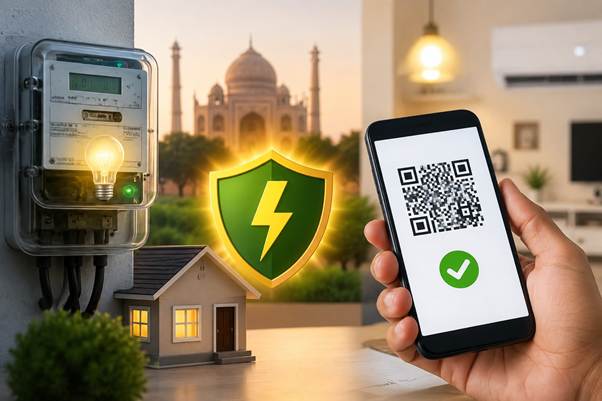
The Delhi government’s free electricity scheme has been running since 2019 and remains active in 2026, confirmed by Chief Minister Rekha Gupta for FY 2025-26. But the scheme requires a one-time opt-in that many eligible households have never completed. The QR code printed on the bill is one of the ways to do it.
For Delhi electricity payments across all four DISCOMs, Bajaj Pay, the Bharat Connect payments platform on Bajaj Finance, shows the exact outstanding amount before you confirm, through UPI, cards, or net banking.
Which DISCOM Serves Your Area
Delhi has four separate electricity distribution entities. Each covers a specific geography and issues its own bill.
| DISCOM | Area Served |
| BSES Yamuna (BYPL) | East and Central Delhi: Shahdara, Karol Bagh, Chandni Chowk |
| BSES Rajdhani (BRPL) | South and West Delhi: Dwarka, Janakpuri, Saket, Vasant Kunj |
| Tata Power-DDL (TPDDL) | North and Northwest Delhi: Rohini, Pitampura |
| NDMC | Lutyens’ Delhi: Parliament zone, Connaught Place central area, embassy zones |
Identifying your DISCOM is the starting point for both subsidy registration and bill payment. The name is printed at the top of your electricity bill.
How the 200 Units Scheme Works
The Delhi government’s subsidy scheme covers domestic consumers registered with BSES Yamuna, BSES Rajdhani, and TPDDL. Over 47 lakh households are eligible, per official Delhi Power Department data.
The structure has three tiers:
| Monthly Consumption | Energy Charge |
| 0 to 200 units | Zero, 100% covered by subsidy |
| 201 to 400 units | 50% subsidy on the first 200 units; full DERC rate on units 201-400 |
| Above 400 units | Full DERC tariff, no subsidy |
The most important number is 400 units. A household that uses 401 units in a month loses the subsidy entirely and pays full tariff on all units. Staying under 400 units preserves the 50% benefit on the first 200.
Fixed charges, electricity duty, and the Power Purchase Adjustment Charge (PPAC) apply on top of energy charges regardless of the subsidy tier. These are set by DERC and appear as separate line items on the bill.
The opt-in requirement: The scheme does not apply automatically to every eligible consumer. A one-time opt-in is required. Methods available:
- Send “Hi” via WhatsApp to 7011311111
- Give a missed call to 011-69100000
- Scan the QR code printed on your electricity bill
Once registered, the subsidy applies automatically to every subsequent bill without re-registration.
What the QR Code on the Bill Does
BSES Yamuna and BSES Rajdhani print a unique QR code on each physical electricity bill. Scanning it does three things depending on the action taken:
It redirects to the bill payment page with the outstanding amount pre-populated. No CA number entry is needed. Payment can be completed through UPI, card, or net banking in the same session.
It routes to the subsidy opt-in page for consumers who have not yet registered for the 200 units scheme.
It provides access to consumption history and previous bills.
BSES has officially warned consumers to scan only the QR code printed on the physical bill. Fake QR codes in fraudulent messages have been circulated. The physical bill QR is the only verified source.
NDMC: A Different System
NDMC electricity bill payment works differently from the BSES system. NDMC covers Lutyens’ Delhi and operates under its own tariff structure, independent of DERC’s BSES rates. The Delhi government’s 200 units free scheme applies to BSES and TPDDL consumers and does not extend to the NDMC area under the same framework.
NDMC introduced a unique QR-based payment system with consumer-specific codes that redirect to the current pending bill and allow payment through any connected digital mode. NDMC consumers pay through the NDMC portal at ndmc.gov.in using the Consumer Account number printed on the bill.
Pay Your Delhi Electricity Bill on Bajaj Finance
For BSES Yamuna electricity bill payment and all other Delhi DISCOM bills, Bajaj Finance fetches the current outstanding amount before you confirm.
Steps to pay your Delhi electricity bill:
- Open the Bajaj Finance app or visit bajajfinserv.in and log in
- Go to Bills and Recharges and select Electricity
- Select your DISCOM: NDMC, BSES Yamuna, BSES Rajdhani, or TPDDL
- Enter your Consumer Account number and fetch the bill
- Review the exact outstanding amount before confirming
- Choose a payment method and complete the payment for an instant Bharat Connect receipt
Delhi’s electricity billing has two features working in the same document. The 200 units scheme removes the energy charge for households that consume under 200 units and gives a 50% reduction for the next 200, but only after a one-time opt-in that many eligible consumers have not completed. The QR code on the bill is the quickest way to complete that opt-in and to pay the bill in the same scan. NDMC consumers operate on a separate system with its own QR payment mechanism and tariff structure.



Be First to Comment