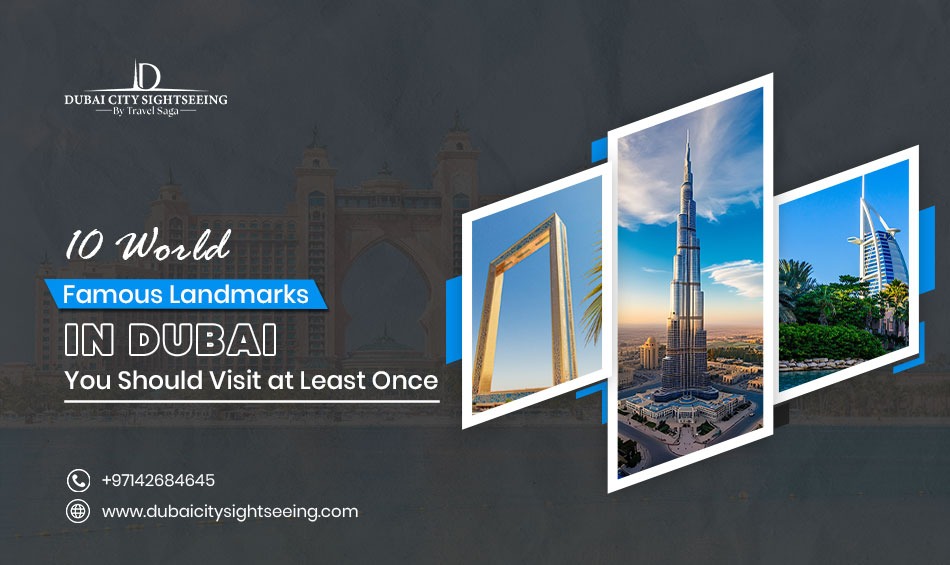
Dubai is a city where futuristic architecture, luxury, culture, and entertainment come together in one extraordinary destination. From record-breaking skyscrapers and man-made islands to historic neighbourhoods and spectacular waterfronts, the city offers an impressive variety of sights for first-time visitors and returning travellers alike.
What makes Dubai particularly fascinating is how quickly the scenery can change. One moment you can be standing beneath one of the world’s tallest buildings, and the next you can be exploring an old souk, admiring traditional architecture, or looking across the Arabian Gulf from a modern waterfront district.
For anyone planning a Dubai holiday, knowing which landmarks deserve a place on the itinerary can make sightseeing much easier. The city’s most famous attractions also make excellent stops on guided, private, hop-on hop-off, and land-and-sea sightseeing experiences. In fact, many of the most popular Dubai Tourist Places can be explored efficiently by combining different sightseeing options according to your available time.
10 Iconic Dubai Landmarks Every Traveller Should Explore
Dubai is home to some of the world’s most recognisable landmarks, blending futuristic architecture, luxury, culture, and unforgettable experiences. From towering skyscrapers to historic neighbourhoods, these iconic attractions showcase the many sides of the city.
Burj Khalifa – The Icon of Modern Dubai
No list of Dubai landmarks would be complete without Burj Khalifa. Standing at 828 metres, it is the world’s tallest building and one of the most recognisable symbols of Dubai.
The building is impressive from ground level, but visitors can also head to its observation decks for panoramic views across the city. The official tourism platform highlights viewing experiences reaching up to 555 metres above the ground.
For first-time visitors, combining Burj Khalifa with Dubai Mall makes sense because the two attractions are located in the same area.
Palm Jumeirah – Dubai’s Iconic Man-Made Island
Palm Jumeirah is one of Dubai’s most recognisable engineering achievements. Designed in the shape of a palm tree, this spectacular artificial island stretches into the Arabian Gulf and is home to luxury hotels, residences, restaurants, beaches, and attractions.
The island is particularly impressive when viewed from above. Helicopter tours and other aerial experiences provide a completely different perspective of its distinctive shape.
For travellers staying on the ground, driving along Palm Jumeirah or taking the Palm Monorail can also provide excellent views of the island and surrounding coastline.
Atlantis The Palm – A Landmark of Palm Jumeirah
Located at the crescent of Palm Jumeirah, Atlantis The Palm has become a landmark in its own right.
Its distinctive architecture makes it one of the most photographed buildings in Dubai, while attractions such as Aquaventure Waterpark and The Lost Chambers Aquarium give visitors reasons to spend more time in the area.
Even if you are not staying at the resort, including an Atlantis photo stop during a city tour is a great way to experience one of Dubai’s most recognisable landmarks.
Dubai Marina – A Modern Waterfront Landmark
Dubai Marina represents another side of the city’s modern identity. Its skyline is filled with towering residential buildings, hotels, restaurants, and waterfront attractions.
The best time to experience the area can be around sunset and evening, when the buildings illuminate the waterfront. Visitors can stroll along Marina Walk, dine beside the water, or take a boat trip for another perspective of the skyline.
Dubai Marina is also commonly included in organised city sightseeing routes, making it an easy addition to a first-time Dubai itinerary.
Burj Al Arab – The Sail-Shaped Symbol of Luxury
The sail-shaped Burj Al Arab is one of the most instantly recognisable landmarks on Dubai’s coastline.
Its distinctive architecture and location beside the Arabian Gulf have made it a favourite photography stop for visitors. You do not necessarily need to stay at the property to appreciate its design—many city tours include an exterior photo stop.
For travellers exploring Dubai by road, the surrounding Jumeirah area also offers opportunities to see some of the city’s beaches and other coastal attractions.
Dubai Frame – Where Old and New Dubai Meet
The Dubai Frame offers something different from Dubai’s skyscrapers. Standing prominently in Zabeel Park, its giant frame design provides views that help illustrate the contrast between the city’s historic neighbourhoods and its modern skyline.
The official Dubai tourism website describes the attraction as a way to put Dubai’s past, present, and future into perspective.
From its elevated viewing area, visitors can see different sides of the city, making it both an architectural landmark and an interesting sightseeing experience.
Museum of the Future – A Landmark of Tomorrow
Dubai is known for futuristic architecture, and the Museum of the Future takes that concept to another level.
Its distinctive torus-shaped building, covered with Arabic calligraphy, has quickly become one of the city’s most recognisable modern structures.
Inside, visitors can explore exhibitions focused on science, technology, innovation, and possible visions of the future. Dubai’s official tourism platform describes it as a destination focused on next-generation science, technology, and innovation.
Even if you do not have time to enter, the exterior is worth seeing and makes an impressive photography stop.
Dubai Mall – More Than a Shopping Destination
Dubai Mall is often associated with shopping, but calling it simply a mall does not capture the scale of the experience.
Located next to Burj Khalifa, it offers entertainment, dining, attractions, and access to the Dubai Aquarium and Underwater Zoo. This makes it easy to combine several experiences in one part of the city.
For first-time visitors, the Burj Khalifa-Dubai Mall combination can be one of the most efficient ways to explore two of Dubai’s best-known attractions in a single outing.
Jumeirah Mosque – A Glimpse Into Dubai’s Cultural Side
Dubai’s identity is not limited to futuristic buildings. Jumeirah Mosque provides an opportunity to experience the city’s cultural and architectural heritage.
The mosque’s elegant design and prominent location make it an important sightseeing stop, particularly for travellers who want to understand a different side of Dubai.
It also demonstrates why a good city tour should not focus entirely on skyscrapers. Combining modern landmarks with cultural attractions can provide a much more complete understanding of the city.
Al Fahidi Historical Neighbourhood – Discover Old Dubai
Before Dubai became known for skyscrapers and luxury developments, the city’s story was rooted in traditional communities, trade, fishing, and pearl diving.
Al Fahidi Historical Neighbourhood offers visitors an opportunity to experience this older side of Dubai. Traditional buildings, narrow lanes, heritage architecture, museums, galleries, and cultural experiences create a striking contrast with Downtown Dubai.
Nearby Dubai Creek, the Gold Souk, Spice Souk, and traditional abra boats can also be included in an Old Dubai sightseeing experience.
Dubai City Sightseeing’s own travel guidance highlights Al Fahidi Historical District and Dubai Creek as important places for visitors interested in the city’s heritage.
How to Explore Dubai’s Landmarks Without Feeling Rushed
With so many attractions spread across different areas, trying to visit everything independently can make your itinerary complicated.
A structured sightseeing experience can help group attractions based on location. For example, a half-day city tour can combine stops around Jumeirah, Burj Al Arab, Palm Jumeirah, Dubai Marina, and other major landmarks.
Travellers who prefer flexibility can consider a private city tour, while those who want to see more attractions at their own pace can use a hop-on hop-off sightseeing bus.
DubaiCitySightseeing.com currently offers several approaches, including half-day city tours, private sightseeing, helicopter experiences, land-and-sea tours, and hop-on hop-off options.
Is a Hop-On Hop-Off Bus a Good Option for First-Time Visitors?
For travellers visiting Dubai for the first time, a hop-on hop-off bus can be a practical way to understand the layout of the city.
Open-top buses provide panoramic views while connecting major attractions across different routes. The format also allows travellers to spend more time at attractions that interest them and less time at places they only want to photograph.
Dubai’s official tourism experience platform also lists City Sightseeing Dubai among its sightseeing and city-tour options.
Can You See These Landmarks in a Short Dubai Trip?
Yes, but planning is important.
If you have only two or three days, focus on attractions that are geographically close to each other. For example, Burj Khalifa and Dubai Mall can be combined, while Palm Jumeirah and Dubai Marina can form another sightseeing block.
Travellers staying longer can add Old Dubai, Dubai Frame, Museum of the Future, Jumeirah, and other attractions.
The key is not to simply create the longest possible list. Instead, organise your sightseeing around location, opening times, travel time, and the experiences you value most.
Tips for Visiting Dubai’s Famous Landmarks
A few simple planning tips can make your sightseeing experience much smoother:
- Start early: Popular attractions can become busy later in the day.
- Group nearby attractions: This reduces unnecessary travel time.
- Wear comfortable footwear: Several sightseeing areas involve considerable walking.
- Carry sun protection: Sunglasses, sunscreen, and a hat can be useful.
- Book popular attractions ahead: Observation decks and major experiences can have limited availability.
- Consider a guided tour: Local guidance can make it easier to understand the history behind major landmarks.
- Keep some flexibility: Dubai has many attractions, so leave room for unexpected discoveries.
Conclusion
Dubai’s landmarks tell the story of a city that has transformed dramatically while continuing to preserve important elements of its heritage. From the record-breaking Burj Khalifa and futuristic Museum of the Future to Palm Jumeirah, Dubai Marina, Dubai Frame, and the historic Al Fahidi neighbourhood, each attraction reveals a different side of the destination.
The best way to experience the city is to create a balanced itinerary rather than simply rushing from one attraction to another. Guided city tours, private sightseeing, helicopter experiences, land-and-sea tours, and hop-on hop-off buses can all help visitors explore more efficiently.
Whether you are visiting for the first time or returning to discover something new, these Dubai City Sightseeing options deserve a place on your itinerary. With thoughtful planning and the right sightseeing approach, you can experience both the futuristic energy and cultural character that make Dubai one of the world’s most fascinating destinations.
FAQs
What is the most famous landmark in Dubai?
Burj Khalifa is arguably Dubai’s most famous landmark. At 828 metres, it is the world’s tallest building and one of the city’s most recognisable symbols.
Which Dubai landmarks should first-time visitors see?
First-time visitors should consider Burj Khalifa, Dubai Mall, Palm Jumeirah, Atlantis The Palm, Dubai Marina, Burj Al Arab, Dubai Frame, Museum of the Future, Jumeirah Mosque, and Al Fahidi Historical Neighbourhood.
Can I visit Burj Khalifa and Dubai Mall on the same day?
Yes. The two attractions are located next to each other, making it convenient to combine them in one visit.
Is Palm Jumeirah worth visiting?
Yes. Palm Jumeirah is one of Dubai’s most distinctive landmarks and offers beaches, resorts, restaurants, attractions, and impressive views of the Arabian Gulf.
What is special about Dubai Frame?
Dubai Frame offers panoramic views that showcase the contrast between Old Dubai and the city’s modern skyline. Its distinctive frame-shaped architecture has also made it one of Dubai’s most recognisable attractions.
Is Museum of the Future worth visiting?
It can be particularly interesting for travellers interested in science, technology, innovation, and futuristic ideas. Its distinctive architecture also makes it a popular sightseeing and photography stop.
How can I explore Dubai landmarks in one day?
A guided or private city tour can help you cover several major landmarks efficiently. A carefully planned route can combine attractions from areas such as Jumeirah, Palm Jumeirah, Dubai Marina, and Downtown Dubai.
Is a hop-on hop-off bus good for Dubai sightseeing?
Yes. It can be useful for first-time visitors who want panoramic city views and the flexibility to spend more time at selected attractions.
Should I book Dubai attractions in advance?
For popular attractions and experiences, advance booking can help secure your preferred date and time, particularly during busy travel periods.
How many days are enough to see Dubai’s major landmarks?
Three to five days can provide a good introduction to Dubai’s major landmarks. A longer stay allows you to explore attractions at a more relaxed pace and add experiences such as desert safaris, cruises, museums, beaches, and theme parks.





Be First to Comment