Key Takeaways
Legionella bacteria can grow in building water systems under favorable conditions. Exposure commonly occurs when people inhale contaminated water droplets or aspirate contaminated water into the lungs.
Environmental testing can help a facility evaluate whether its water management program is controlling Legionella effectively. Testing should not be treated as a substitute for a complete program.
Sampling locations and frequency should reflect the building’s water systems, occupancy, operating history, vulnerable populations, and applicable regulatory or accreditation requirements.
Culture and molecular methods provide different forms of information. Facilities should select a method according to the purpose of the investigation and the way results will be interpreted.
Laboratory qualifications should be reviewed for the specific method, sample type, and jurisdiction involved. A general laboratory accreditation may not cover every Legionella service.
Sample collection, transportation, holding time, temperature control, and documentation can influence the reliability of laboratory findings.
A positive result requires contextual evaluation. The appropriate response depends on the organism detected, concentration, location, facility type, population served, water management plan, and public health circumstances.
Why Legionella Control Requires More Than a Single Test
Legionella occurs naturally in freshwater environments, but it may become a health concern when it grows within building water systems. Complex plumbing, stagnant water, favorable temperatures, low disinfectant levels, sediment, and biofilm can contribute to conditions that allow the bacteria to persist.
Buildings with large or complicated water systems may have several potential exposure points. These can include showers, faucets, cooling towers, hot tubs, decorative fountains, humidifiers, and certain medical devices.
Understanding Health Risks and Exposure
The Environmental Protection Agency explains the concern clearly:
“Legionella can become a health concern when it grows and spreads in a building’s water system.”
— U.S. Environmental Protection Agency
People most often become exposed by inhaling spray or small droplets containing the bacteria. Aspiration, which occurs when contaminated water accidentally enters the lungs while a person is swallowing, is a less common route.
Legionella can cause Legionnaires’ disease, a serious form of pneumonia. It can also cause Pontiac fever, a milder illness that does not involve pneumonia.
Not everyone exposed becomes ill. The risk may be greater for:
- Adults aged 50 or older
- Current or former smokers
- People with chronic lung disease
- People with weakened immune systems
- People receiving immunosuppressive treatment
- People with cancer
- People with underlying conditions such as kidney failure, liver failure, or diabetes
The presence of a susceptible population is one factor facilities should consider when developing water management and testing plans.
Testing water does not diagnose illness in an individual. Clinical evaluation and testing are separate from environmental sampling and should be handled by healthcare and public health professionals.
The Role of Testing in Water Management
Environmental sampling can provide information about conditions within a building water system. It may help a water management team evaluate trends, investigate possible control failures, confirm the effectiveness of corrective actions, or support a public health investigation.
CDC states:
“An effective water management program is the primary strategy to control Legionella growth and spread to prevent Legionnaires’ disease.”
— Centers for Disease Control and Prevention
A water management program generally identifies the systems that need to be controlled, locations where hazardous conditions could occur, monitoring procedures, control limits, corrective actions, and documentation responsibilities.
Testing can be used to validate whether that program appears to be controlling Legionella over time. It should not be performed without a plan for interpreting the findings and responding to them.
CDC recommends routine Legionella testing for inpatient healthcare facilities because they serve vulnerable populations. Other facilities serving vulnerable people should consider routine testing as a best practice. Decisions for other buildings depend on facility-specific factors and applicable requirements.
Building a Facility-Specific Sampling Strategy
No single sampling schedule applies to every building. A hospital, hotel, apartment complex, school, manufacturing facility, and office building may have very different water systems, operating conditions, and populations.
The sampling strategy should begin with an environmental assessment. This process helps the water management team understand how water enters, moves through, and leaves the facility.
Deciding Where and When to Collect Samples
Sampling locations should be selected according to the purpose of the testing. A routine validation plan may differ from sampling conducted during an illness investigation or after remediation.
Potential locations can include:
- Incoming water
- Water heaters and storage tanks
- Hot-water return loops
- Distal outlets
- Showers and faucets
- Areas with infrequent water use
- Cooling towers
- Decorative water features
- Hot tubs or spas
- Equipment that produces spray or mist
- Locations with previous positive findings
A representative plan does not necessarily involve testing every outlet. The water management team should identify sites that can provide useful information about system conditions and possible areas of concern.
Testing frequency may be influenced by:
- Facility type
- People served by the building
- Water system complexity
- Previous findings
- Changes in occupancy
- Construction or plumbing modifications
- Water interruptions
- Extended periods of low use
- Control-measure performance
- Local requirements
- Public health recommendations
Claims that all facilities should test monthly or quarterly are too broad. CDC explains that decisions about sampling frequency, location, and methodology are made by the water management team because sampling plans are unique to each facility.
Comparing Culture and Molecular Methods
Culture testing involves attempting to grow viable Legionella from an environmental sample. It can identify and quantify culturable organisms, although obtaining final results generally takes longer because colonies need time to develop.
Polymerase chain reaction methods detect Legionella genetic material. These methods may produce results more quickly, but detected DNA may come from living or nonviable organisms. A PCR result therefore does not always have the same meaning as a culture result.
The selected method should reflect the testing objective. Relevant questions include:
- Is the purpose routine validation or outbreak investigation?
- Does the facility need information about viable organisms?
- Is rapid screening required?
- Will confirmation or additional characterization be needed?
- What method is recognized by the relevant authority?
- How will the result affect corrective actions?
- Can current findings be compared with historical data?
Facilities should discuss these questions with qualified water management, laboratory, infection prevention, industrial hygiene, or public health professionals.
A faster result is not automatically more useful. The value of a testing method depends on whether it produces information appropriate for the decision being made.
Choosing a Laboratory and Handling Samples
A laboratory should be selected according to the required analysis, sample matrix, applicable standard, and reporting needs. Price and turnaround time matter, but they should not be evaluated in isolation.
Facilities considering legionella water testing can review the culture-based water and surface-swab services offered by Ascend Clinical. The laboratory states that it participates in the CDC ELITE program and performs Legionella culture testing associated with ISO 11731 methods.
Those statements should be confirmed against current certificates and the laboratory’s scope of accreditation before samples are submitted.
Reviewing Laboratory Qualifications
Laboratory evaluation may include:
- Accreditation and the applicable scope
- Proficiency-testing participation
- Methods used
- Organisms and species reported
- Sample types accepted
- Detection and quantification limits
- Turnaround times
- Quality-control procedures
- Reporting format
- Data-retention policies
- Procedures for unusual or urgent findings
- Availability of technical support
The CDC ELITE program helps laboratories test their ability to isolate Legionella from simulated environmental samples. Participation or proficiency can be relevant, but the facility should still examine the complete laboratory service and applicable accreditation requirements.
ISO 11731 describes culture methods for enumerating Legionella in water samples. A laboratory referencing the standard should be able to explain which version or method it follows and whether the work falls within its accredited scope.
Facilities should also determine whether their state, local jurisdiction, accreditation organization, or contracting requirements specify an approved laboratory or method.
Protecting Sample Quality
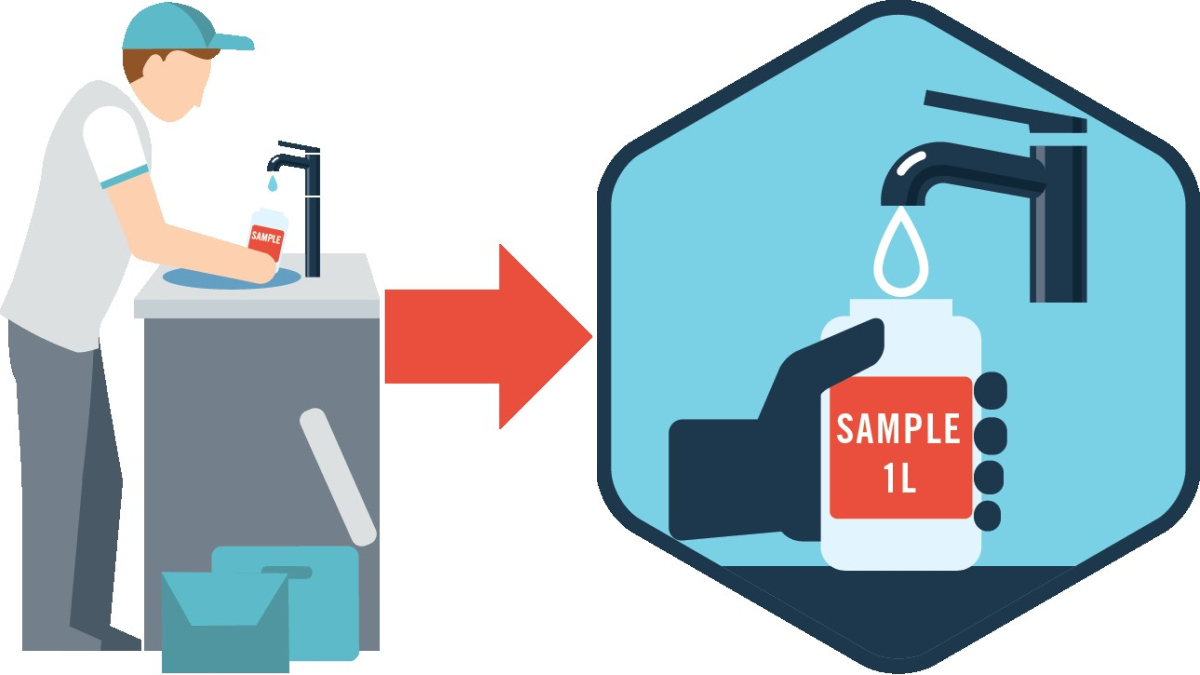
A reliable laboratory method cannot correct every problem introduced during sampling or transportation. Collection should follow a written protocol that matches the laboratory’s requirements.
Before sampling, the facility and laboratory should agree on:
- Container type and volume
- Use of neutralizing agents
- Water and biofilm sample procedures
- Pre-flush or post-flush collection
- Temperature measurements
- Disinfectant measurements
- Labeling requirements
- Shipping temperature
- Maximum holding time
- Chain-of-custody documentation
- Weekend or holiday delivery restrictions
The sampling record should identify the precise location, date, time, collector, sample type, and relevant field measurements. Notes about recent flushing, disinfection, construction, or low occupancy may also help with interpretation.
Collection practices should remain consistent when results will be compared over time. Changing the sample location, volume, flushing procedure, or analytical method can make trend evaluation more difficult.
The facility should contact the laboratory before collecting samples. This reduces the risk of using an unsuitable container, missing a holding-time requirement, or submitting incomplete documentation.
Interpreting Results and Planning the Response
A laboratory report provides analytical findings, but it does not independently determine the building’s public health risk or prescribe every next step.
Interpretation should involve the water management team and appropriate subject-matter professionals. Public health authorities may need to participate when illness, an outbreak, or a reporting obligation is involved.
Evaluating Findings in Context
A Legionella result may identify the organism, species or serogroup, concentration, analytical method, and reporting limit. The precise information depends on the test performed.
Questions to consider include:
- Where was the sample collected?
- Was it water, biofilm, or another sample type?
- Was the outlet sampled before or after flushing?
- What method was used?
- Were Legionella pneumophila or other species detected?
- What concentration was reported?
- Have previous samples from the location been positive?
- Were temperature, disinfectant residual, and pH within established limits?
- Does the facility serve people at elevated risk?
- Are illnesses suspected or confirmed?
- Were sampling and transportation requirements followed?
There is no single environmental concentration that dictates the same response in every facility. Healthcare settings, outbreak investigations, and buildings serving vulnerable populations may require a more cautious approach.
A nondetect result does not prove that Legionella is absent from the entire water system. Sampling covers selected locations at a particular time, and bacterial distribution can vary.
A positive result also does not establish that anyone has been exposed or become ill. It indicates that the finding should be assessed within the broader water management and public health context.
Corrective Actions and Follow-Up Testing
The water management plan should define what happens when control limits are not met or testing identifies a concern. Corrective actions should be selected according to the system, finding, and applicable professional guidance.
Possible responses may include:
- Confirming sample and laboratory information
- Reviewing temperature, disinfectant, and pH records
- Inspecting equipment and affected plumbing
- Increasing flushing at selected locations
- Cleaning or maintaining water-using devices
- Adjusting established control measures
- Restricting exposure at selected outlets
- Using point-of-use filters when appropriate
- Conducting targeted remediation
- Consulting public health authorities
- Collecting follow-up samples
- Updating the water management plan
Disinfection can create chemical, corrosion, scalding, and occupational hazards if it is performed incorrectly. Facilities should not apply a generic temperature or chemical treatment without considering system design, materials, users, local rules, and professional guidance.
Documentation should include the original result, assessment, decisions, corrective measures, verification activities, follow-up findings, and program changes.
Follow-up testing may help determine whether corrective actions had the intended effect. The timing and locations should be established before samples are collected whenever possible.
Legionella testing is most useful when it answers a defined question within a functioning water management program. Careful planning, suitable laboratory methods, consistent sampling, and contextual interpretation allow facilities to use the results more responsibly.
FAQ
What illnesses can Legionella cause?
Legionella can cause Legionnaires’ disease, a serious form of pneumonia, and Pontiac fever, a milder influenza-like illness. People with symptoms should seek medical care. Environmental water testing cannot diagnose either illness.
Does every commercial building need routine Legionella testing?
Not necessarily. Testing decisions depend on the building, water systems, occupants, water management plan, and applicable requirements. CDC recommends routine testing for inpatient healthcare facilities and advises other facilities serving vulnerable populations to consider it as a best practice.
How often should a facility collect samples?
There is no universal frequency. The water management team should establish a schedule using the facility’s environmental assessment, control performance, previous findings, population, and regulatory obligations.
What is the difference between culture and PCR testing?
Culture attempts to detect viable Legionella by growing the organism and can provide quantitative information. PCR detects genetic material and may return results more quickly, but it may also detect DNA from organisms that are no longer viable.
Does a positive result mean the building caused an illness?
No. A positive environmental sample shows that Legionella was detected at the sampled location under the conditions present at that time. Linking an illness to a building generally requires epidemiologic, clinical, and environmental investigation.
Does a nondetect result prove the building is safe?
No. A nondetect result applies to the collected sample and analytical detection limit. Legionella may be unevenly distributed, and system conditions can change. Results should be considered with monitoring data and water management activities.
What should happen after a positive result?
The facility should review the result, sampling conditions, water management data, location, concentration, population served, and applicable requirements. Corrective action and follow-up testing should be selected with qualified professionals. Public health authorities should be contacted when circumstances require their involvement.
How much does Legionella testing cost?
Cost depends on the method, number of samples, sample type, shipping, turnaround time, reporting needs, and additional analysis. Facilities should request a written quotation and confirm what collection materials, reporting, and technical support are included.
Useful Resources
- CDC Control Legionella
- CDC Steps to Develop a Water Management Program
- CDC Water Management Program Validation
- CDC Toolkit for Controlling Legionella
- CDC Environmental Assessment Form
- EPA Legionella in the Indoor Environment
- EPA Technologies for Legionella Control
- OSHA Legionellosis Resources
- ASHRAE Standard 188 Information



Be First to Comment