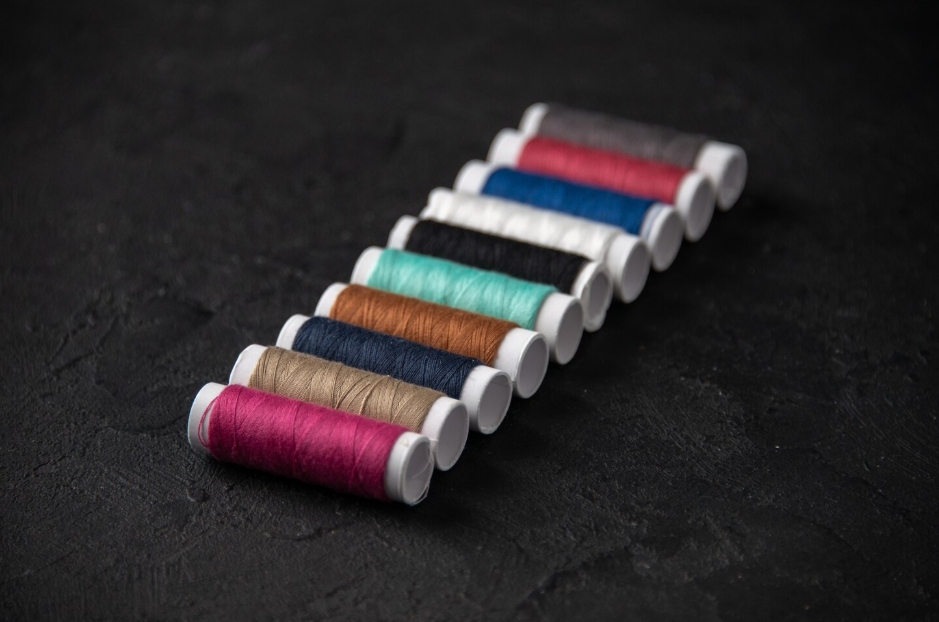
Sewing thread may account for only a small portion of the total cost of an apparel product, but its performance can have a major impact on garment quality, durability, production efficiency, and customer satisfaction. Even a thread that seems appropriate for the cone can result in breakage, seam failure, puckering, or shoddy stitch formation during the production process.
This is because testing sewing thread (polyester corespun thread) is one of the important steps in the quality management of garments. Not only are physical characteristics important to manufacturers in selecting a thread, but its performance during sewing and following the garment through “actual conditions” is equally significant.
This is the list of eight major performance tests to note that any apparel maker should understand.
Tensile Strength Test
Tensile strength is the highest amount of force that the sewing thread can endure before it breaks. It is one of the most basic tests to assess the performance of threads.
A thread that is not strong enough can easily snap during running and could break when the garment is pulled and stressed. But this may not always be the best choice regarding thread.
Manufacturers should consider:
- Fabric construction and weight
- Seam type
- Stitch density
- Thread size
- Expected garment usage
- Required seam strength
The goal is to provide a satisfactory amount of seam strength while maintaining sewing operation and fabric properties.
Elongation Test
Elongation quantifies the extent of elongation of the thread prior to failure, typically given as a percentage of the original length.
It is important when working with fabrics that move and stretch, like sportswear, underwear, and activewear, and frequently when stitching stretch fabrics together.
Fabric movement and minimizing seam cracking or thread breakage can be achieved by using a thread with the correct elongation.
Too long may also cause improper stitch formation and appearance of seams. So, use the optimum elongation for the use and materials.
Abrasion Resistance Test
While there is sewing, the thread passes through the sewing machine and other machine parts and passes through continuously. It can also rub or rub again during use in the finished product.
The abrasion resistance test is intended to measure the resistance of the thread to such mechanical wear.
An ideal abrasion-resistant material would be desirable for:
- Workwear
- Denim
- Outdoor apparel
- Uniforms
- Upholstery applications
- Heavy-duty garments
A thread that has a bad resistance to abrasion can get fuzzy, weaken, or even break down over time, leading to a failure in the seams.
Seam Strength Test
The strength of a finished seam is not based on the strength of the thread used to sew it. The type and strength of stitch, stitch density, sewing environment, fabric strength, and thread size also affect seam performance.
A seam strength test is used to measure how much pressure is needed to tear a stitch on a sewn seam. It gives an application-centric evaluation of thread performance.
This test allows the manufacturers to compare various different thread constructions and help decide if the chosen count combination of thread, fabric, and stitches has met the desired specifications.
This is especially critical for items that undergo high mechanical demands.
Colorfastness Test
The color of thread (textured thread) plays an important role in a garment’s appearance. If the color doesn’t fade or bleed during washing, even then it can be an obvious fault because of the colors that are stripped off the thread.
The colorfastness test is the measure of the colorfastness of the thread under various test conditions, such as
- Washing
- Water
- Perspiration
- Light
- Heat
- Chemical treatments
The test requested will vary according to the end use of the garment. For instance, exterior garments might call for more lightfastness, or washable apparel with higher resistance to washing.
Another side to keeping the visibility identity of branded garments on the same thread color.
Shrinkage Test
Seam quality may be a serious issue due to shrinkage of the thread. A thread that shrinks much, but the fabric does not shrink, can cause puckling at seams or result in a puckled fabric.
The shrinkage test measures the change of size or dimensions of the thread resulting from specific washing, drying, or heat treatment.
When manufacturing the following items, manufacturers should be mindful of thread shrinkage:
- Cotton garments
- Washed denim
- Uniforms
- Knitwear
- Garments requiring industrial laundering
Matching dimensions of the thread and fabric into the garment throughout its life cycle provides maintenance of seam appearance.
Lubrication and Friction Test
Thread friction directly affects sewing machine performance. The excessive friction as the thread is rushed through the guides, tension discs, and needle eye may cause the thread to become too hot, which can result in inconsistent tension or thread breakage.
The running ease of a thread through the machine depends on the finish and lubrication system of the thread.
Factors to assess in a test include:
- Friction in high-speed sewing
- Passing thread through guides
- Needle heating
- Tension stability
- Thread breakage
- Residue or contamination
An adequately lubricated thread can help to increase sewing speed and decrease sewing stoppages.
Color and Appearance Consistency Test
Physical characteristics of the thread should also be assessed for quality testing. Quality from lot to lot can result in differences in appearance of finished garments.
Manufacturers should check:
- Color consistency
- Thread diameter
- Winding quality
- Hairiness
- Fuzziness
- Surface finish
- Package build
For faster or automated sewing machines, consistent winding is important, as it may be challenging to control thread supply and tensions while working on an irregular package
Benefits of Testing Beyond The Laboratory
Testing in the lab gives a good idea of what is happening but also tests how the thread performs under actual production conditions. A thread can conform to its strength requirement but not in another machine or fabric it comes across.
A testing workflow with practical experience using a thread machine should contain:
1. Select the thread according to the application.
2. Match the needle and machine to the thread.
3. Conduct sewing trials at normal production speeds.
4. Monitor thread breaks, tension, needle heating, and stitch consistency.
5. Inspect the finished seam.
6. Do durability and washing tests as required.
7. Record the results and determine acceptance criteria.
This approach is being used to assess the entire sewing system, instead of threads alone.
Conclusion
Consistency of clothes reliability and manufacturing is essential by means of the sewing thread testing approach. Each of these—tensile strength, elongation, abrasion resistance, seam strength, colorfastness, shrinkage, friction, and appearance consistency—offers some information about thread performance.
The best way to make sure it’s right for your specific purposes is to use a combination of laboratory testing, real-machine sewing trials, and finished-garment evaluations. The choice and testing of thread, based on the specific application, can help apparel manufacturers to lessen the breakage of threads, reduce rework, increase seam durability, and join the quality of garments.




Be First to Comment