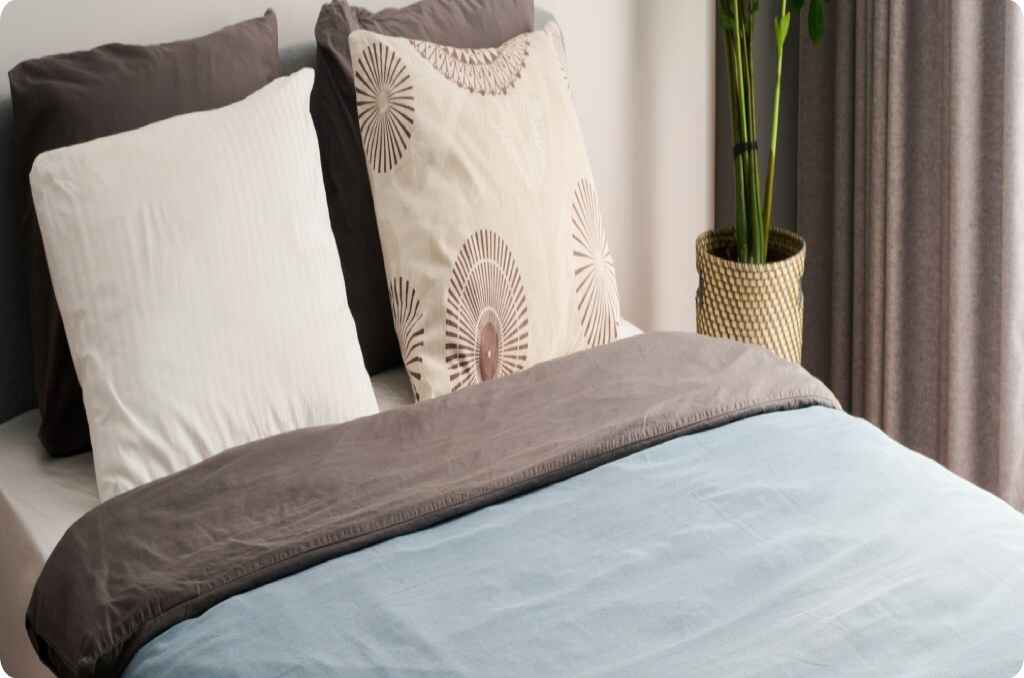
For decades, the global textile industry has conditioned consumers to believe that a higher thread count automatically equals superior quality.
However, for those living in Bangladesh’s intense humidity, this focus on thread count is often a mistake.
High-thread-count sheets are usually woven so tightly that they trap body heat and moisture, leading to uncomfortable, sweaty nights.
In a tropical climate, the priority must shift from the number of threads to the fiber quality and the weave’s air permeability.
This guide deconstructs the myths surrounding bedding and explains why breathable cotton bed sheets are the only practical choice for urban dwellers in cities like Dhaka.
We explore the technical differences between Percale and Sateen weaves, the impact of multi-ply yarns on durability, and how to maintain freshness in a high-humidity environment.
By understanding that a lower thread count with a superior weave actually promotes better airflow, you can transform your sleep quality and ensure your bed remains a calm, dry sanctuary even during the monsoon season.
Why Humidity Changes the Bedding Rules
In a humid environment like Bangladesh, moisture cannot evaporate from the skin if the bedding blocks airflow.
Our bodies cool down through the evaporation of sweat. If your bed sheets are woven too tightly, moisture can stay trapped against your skin.
This creates that sticky, heavy feeling we all know too well. To stay cool, you need a fabric that acts like a lung.
You need breathable cotton bed sheets that let humid air pass through the fibers and away from your body.
Thread Count vs. Airflow: The Humidity Comparison
| Feature | High Thread Count (800+) | Optimal Thread Count (200 to 400) |
| Air Permeability | Very Low (Blocks air) | High (Promotes airflow) |
| Heat Retention | High (Traps heat) | Low (Stays cool) |
| Moisture Wicking | Poor | Excellent |
| Feel in Humidity | Heavy and sticky | Crisp and dry |
| Durability | Prone to pilling if multi-ply | High if single ply long staple |
The Science of the Weave: Percale vs. Sateen
In a humid climate, a Percale weave is superior to Sateen because its one-over, one-under structure allows for maximum ventilation.
If you look closely at your sheets, you will see a pattern.
- Percale: A simple, matte weave. It feels like a crisp white button-down shirt. Because the threads are woven loosely in a grid, air moves through them easily.
- Sateen: This weave uses a 4-over, 1-under pattern. It creates a silky, shiny surface. While it feels luxurious at first, the weave is much tighter. It traps heat.
If you live in Dhaka or Chittagong, Percale is your best friend. It stays cool to the touch all night long.
Why Long Staple Cotton is the Secret Ingredient
The quality of the cotton fiber matters more than the count because longer fibers create stronger, smoother yarns that do not need to be woven as tightly.
When you use long staple cotton, you get a durable fabric without the bulk. You can have a 250-thread-count sheet that feels softer and lasts longer than a cheap 600-thread-count version.
These high-quality, breathable cotton bed sheets are the gold standard for tropical living. They offer the perfect balance of softness and ventilation.
Maintenance: Keeping Your Bedding Fresh in the Monsoon
To prevent musty odors and bacterial growth during the monsoon, bedding should be washed in warm water and dried thoroughly in a well-ventilated area or sunlight.
Humidity is not just a comfort issue. It is a hygiene issue. Dust mites and mildew love damp fabric.
- Weekly Wash: Change your sheets at least once a week.
- Sunlight: Whenever the sun comes out, let your pillows and sheets soak up those UV rays. It is the best natural disinfectant.
- Avoid Softeners: Commercial fabric softeners can coat cotton fibers in a thin layer of wax. This reduces the breathability of your sheets over time.
Frequently Asked Questions
Is 100 percent cotton always breathable?
Not necessarily. Even 100 percent cotton can be woven so tightly that it loses its breathability. This is why you must check the weave and the thread count. Look for labels that mention Percale or “cool and crisp” rather than just the material.
Does a lower thread count mean the sheets will be rough?
No. Roughness usually comes from low-quality, short fibers that poke out and cause pilling. If you choose high-quality, long staple cotton with a 200 to 400 thread count, the sheets will be incredibly smooth and get even softer with every wash.
Why do my sheets feel damp even when I am not sweating?
In very high humidity, cotton can actually absorb moisture from the air itself. If your room is not well ventilated, your sheets will feel “clammy.” Using a ceiling fan or keeping a window slightly open helps the fabric release that moisture back into the air.
How can I tell if a sheet is “single ply” or “multi ply”?
Manufacturers often hide this in small print. If you see a thread count over 500 at a very low price, it is almost certainly multi-ply. High-quality single-ply sheets will usually proudly state “Single Ply” or “Long Staple Cotton” on the packaging.



Be First to Comment