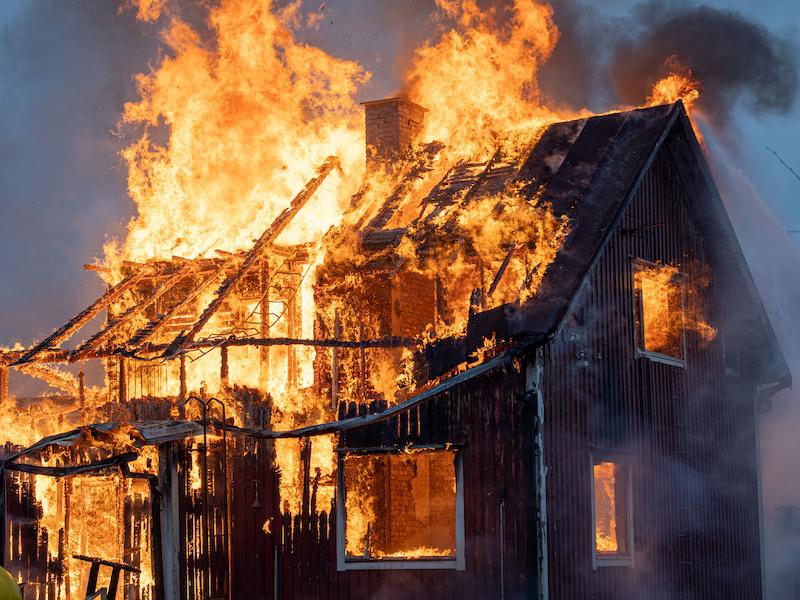
Losing your home to a fire is a difficult experience, and the financial impact can be challenging without fire insurance policy coverage. While recovery may seem overwhelming, knowing what to do next can make the process more manageable. This guide explains the financial implications of an uninsured house fire and practical steps to help you move forward.
Steps to Take After Facing a House Fire
A house fire can be a frightening experience, but taking the right steps can make the recovery process more manageable. Focus on your safety first, then take the necessary actions to protect your property and support your fire and burglary insurance claim, if you have one. Here are the steps you must follow:
Step 1: Put Safety First
Make sure everyone is safe and get medical help if needed. Do not enter your home until the fire department confirms it is safe. If your home is covered under a fire insurance policy, inform your insurer as soon as you can.
Step 2: Record the Damage
Before you clean or move anything, take clear photos and videos of the burned areas. List out all the damaged belongings and keep repair estimates and bills. These may be useful when filing your fire insurance claim.
Step 3: Avoid Rushing the Clean-Up
It may be easy to start cleaning immediately, but fire-damaged areas can be unsafe. Wait until the property has been inspected, and if required, allow your fire insurance provider to assess the damage before major repairs begin.
Step 4: Get Professional Help
Choose a reliable fire damage restoration service to safely clean and restore your home. Their inspection reports and repair estimates can also support your insurance claim, wherever applicable.
Step 5: Dispose off Debris Safely
If the necessary inspections are complete, safely dispose off fire-damaged materials through service providers. With this, you can get safer recovery and prevent health or environmental risks.
Financial Implications of Losing a Home Without Insurance
Without insurance, you have to bear the cost of rebuilding and replacing your belongings. This can include expenses such as:
- Rebuilding or repairing the damaged structure.
- Replacing furniture, appliances, electronics, and other personal belongings.
- Paying for temporary accommodation while your home is being restored.
- Covering debris removal and clean-up costs.
In the absence of fire insurance, many homeowners use their personal savings, take out loans, or receive financial assistance from government or charitable organisations. However, these sources may not fully cover the actual cost of recovery, making it much more difficult to rebuild and return to normal life.
Why is Fire Insurance Essential for Your Property?
A fire insurance policy helps you manage these unexpected losses by providing financial support.
- Helps You Rebuild Your Property: It can cover the cost of repairing or rebuilding your home or commercial property after an insured fire.
- Protects Your Finances: Instead of bearing the full cost of repairs, fire insurance helps reduce the financial impact of an unexpected loss.
- Safeguards Your Belongings: Depending on your policy, it may also cover insured furniture, equipment, or other valuable contents damaged in the fire.
- Supports Your Recovery: If your property becomes temporarily unfit to live or work in, the policy may help with additional expenses, subject to the policy terms and conditions.
- Gives You Protection: Knowing your property is protected lets you focus on recovery rather than worrying about unexpected costs.
Conclusion
A fire has long-term financial consequences, especially when there is no insurance. You must always review your coverage needs and consider fire insurance from insurers like TATA AIG to stay better prepared. The right policy provides essential financial support when you need it.





Be First to Comment