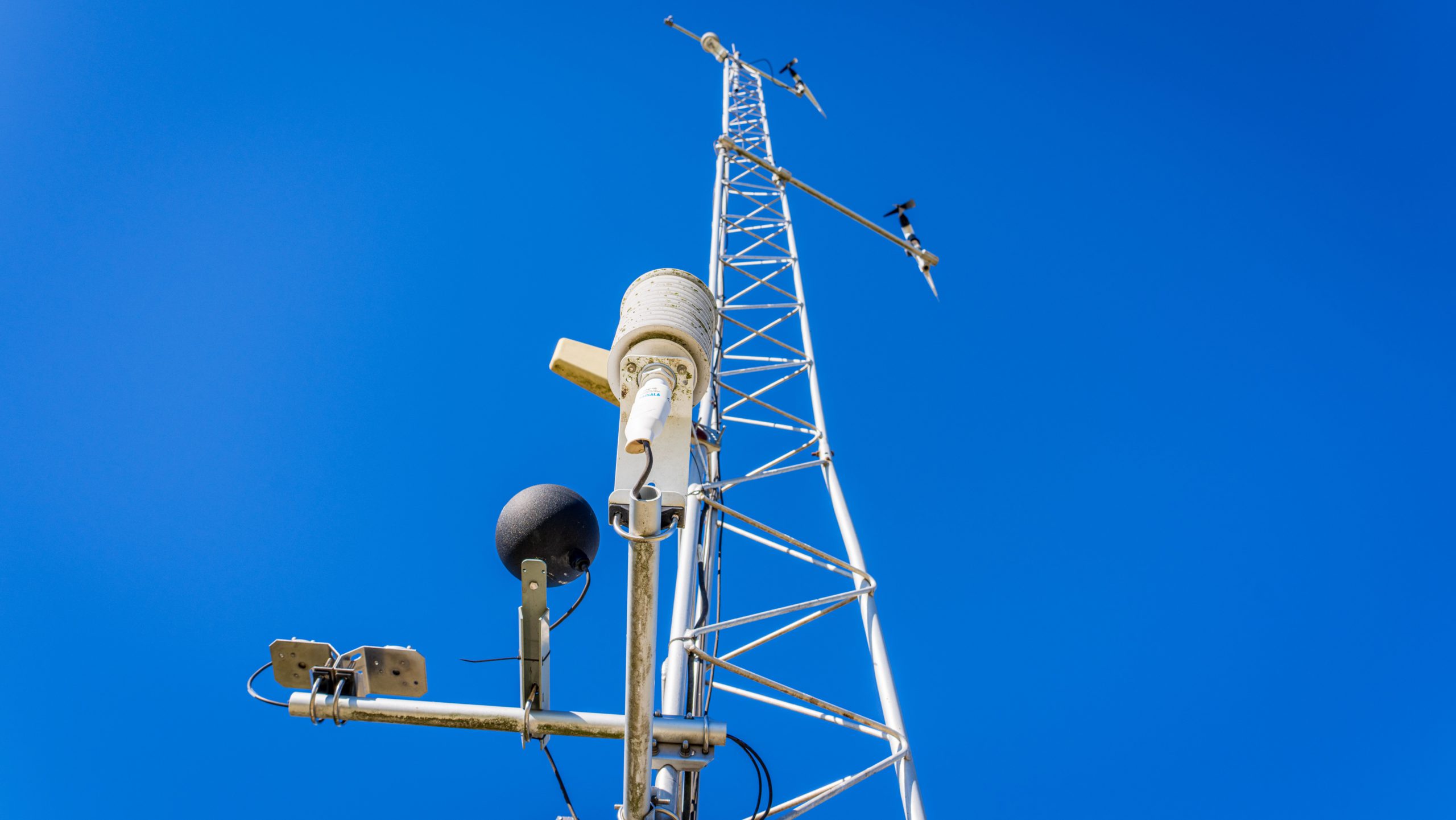
Have you ever thought about how a weather forecast team knows when it will rain, get windy, or become extremely hot? It is all done with measurements. Weather instruments help in recording and measuring weather daily, which we can’t do by looking outside. There are several types of instruments from where readings are collected at different weather stations. As a result, this helps to determine what is going on in the atmosphere. Moreover, they provide meteorologists with the weather data to give forecasts and understand the conditions. Here are some of the most common weather instruments.
Types of Weather Instruments
Here are some of the tools that you need to know:
1. Thermometer
This tool measures air temperature, usually in degrees Celsius or Fahrenheit. Today, weather stations typically employ electronic temperature sensors; old ones utilized liquid thermometers. Thermometers are kept out of direct sunlight or other artificial heat sources in order to obtain true readings.
Uses: It is used to measure temperature in weather stations, agricultural applications, climate monitoring, aviation, and daily weather forecasts.
How they help measure weather: Temperature tells about the level of energy in the air. As a result, it will help meteorologists to monitor heatwaves, cold spells, and daily and seasonal temperature fluctuations.
2. Barometer
This tool is used to measure the air pressure around us, which is called atmospheric pressure. The traditional barometer is a column of mercury or a mechanical dial without mercury. Today, many weather stations typically use electronic sensors. They can help to predict changing weather and keep a record of downward or upward pressure fluctuations over time.
Uses: Barometers are used for weather forecasting, aviation, and monitoring developing weather systems.
How they help measure weather: Pressure changes can provide hints to the conditions on the approach. This link between falling pressure and unsettled or stormier weather, and higher pressure with more settled weather, is often apparent.
3. Anemometer
The anemometer is a weather instrument for measuring wind speed. A common cup anemometer consists of a central shaft with small cups that spin as wind blows through. The greater the wind speed, the faster the cups spin. This movement is measured by the instrument and is then expressed in terms of wind speed, typically in kilometres per hour (km/h) or metres per second (m/s).
Uses: Weather stations, airports, wind farms, research stations, and other places that need to know the wind conditions use anemometers.
How they are used to measure weather: They give the actual speed of the wind rather than someone describing the wind as being “strong” or “light.” This is useful for identifying gusts and measuring storms and forecasts.
4. Wind Vane
This tool indicates the wind direction. The arrow or pointer can move freely by aligning with the flow of air. The direction of the wind is generally given as the direction from which the wind blows. For example, an easterly wind is blowing from the east.
Uses: They are used at weather stations, airports, farms, and other sites where wind direction is important.
How they help measure weather: Understanding wind direction can give weather forecasters clues about airflow into a region. When combined with the temperature and pressure data, it can also help determine changing weather patterns and approaching weather systems.
5. Rain Gauge
This device is used to measure the amount of rainfall that is received in a particular area over a set time period. Basic gauges are useful for collecting rain in a container, which is measured afterwards, whereas tipping-bucket gauges will automatically record rainfall as the collected water fills and tips a small bucket. This assists in measuring rainfall amounts and intensity.
Uses: Useful for measuring in weather stations, farming, water management, flood monitoring, and climate records.
How they help measure weather: They give a measurement of rainfall accumulation. Tipping-bucket gauges can record how heavy and fast rain is falling, offering meteorologists data about rainfall amount and intensity.
6. Hygrometer
It is a tool used to measure the amount of moisture in the air. The reading is usually shown as relative humidity in percentage. Humidity tells us how much water vapour is present in the air; and can help us understand conditions that may lead to fog, clouds, or rain.
Uses: Weather stations, agriculture, greenhouses, industries, and climate studies use hygrometers.
How they help measure weather: Humidity readings can assist in explaining the effect on air moisture and may be useful to know when considering the humidity of fog, clouds, rain, and heat stress. If humidity is 100%, then air can no longer absorb any more water in the form of vapour.
7. Weather Radar
Weather radars differ from the weather station instruments because they are able to see precipitation over a much larger geographical area. Radar transmits radio waves and records the waves that reflect from objects like raindrops.
Uses: Can be useful in tracking rainfall, thunderstorms, heavy precipitation, and other weather development.
How it helps measure weather: Radar can depict rainfall amounts, rainfall intensity, and motion. Moreover, Doppler radar assists in providing data on the direction of precipitation approach or retreat. This is used to track storms.
Conclusion
Weather instruments can look simple, but they are very important. Different instruments will help in measuring temperature, rainfall, tracking wind, humidity, air pressure, and storms. Moreover, meteorologists can use these tools with each other to measure weather conditions and make accurate forecasts. So, these tools prove useful to different areas, like helping farmers, pilots, researchers, and emergency services make better decisions. As a result, they can take necessary precautions as per their needs.
FAQs
1. Which tool is most commonly used?
The most common is a thermometer. The tool is used in home weather stations to professional meteorological setups.
2. Which instrument measures wind speed?
An anemometer measures wind speed. Cup and propeller anemometers are commonly used at weather stations.
3. Why are weather instruments important?
These tools can tell us about temperature, rainfall, wind, humidity, and air pressure accurately. These readings will help to measure temperature and help take necessary precautions in case of severe weather conditions.



Be First to Comment