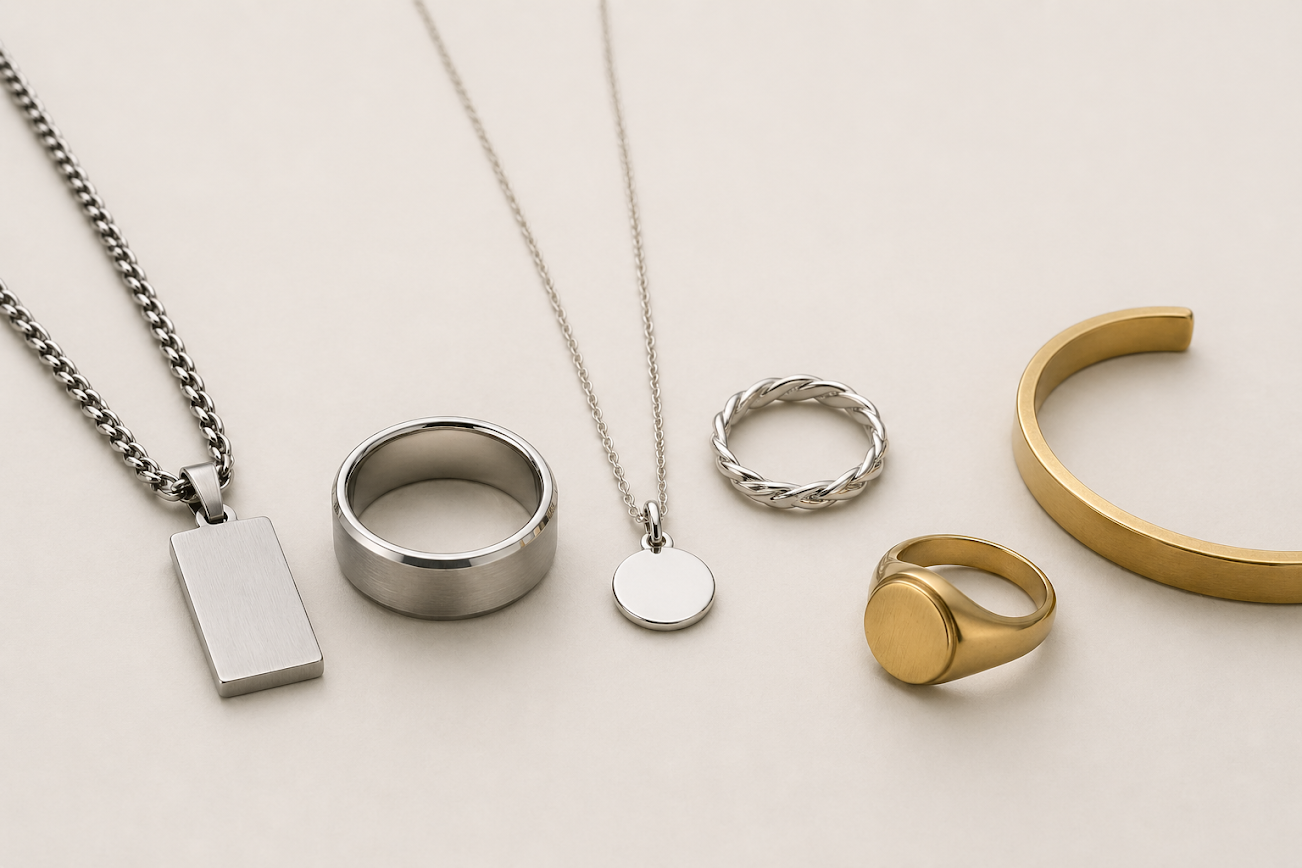
Not long ago, carrying popular jewelry styles was often enough to attract customers. Today, that’s much harder to achieve. With countless products available online and new brands entering the market every day, retailers face increasing pressure to give shoppers a reason to choose them over the competition.
That’s one reason private label jewelry has become such a compelling growth strategy. Instead of selling products that can be found in dozens of other stores, retailers can create collections that reflect their own brand. To support this shift, many retailers partner with leading custom jewelry manufacturers to develop exclusive collections and build a more distinctive market presence.
As customer expectations continue to evolve, private label jewelry is becoming an increasingly attractive path for long-term growth.
What Private Label Jewelry Really Means
At its simplest, private label jewelry allows retailers to sell products under their own brand rather than a manufacturer’s.
That may sound like a small difference, but it can have a major impact. When multiple retailers sell the same products, customers often compare prices instead of brands, making it difficult for any one business to stand out.
Private label offers an alternative. Rather than stocking ready-made products, retailers can create collections that align with their brand and customer preferences. They also gain greater control over product selection, packaging, and the overall customer experience.
Whether the focus is stainless steel jewelry, 925 sterling silver jewelry, brass jewelry, or a mix of materials, private label collections give retailers the opportunity to offer something more distinctive. Many businesses work with manufacturing partners such as UVARA Jewelry, trusted jewelry manufacturer in China, to develop collections that support their branding goals.
More importantly, private label shifts the focus from simply selling products to building a recognizable brand.
Building a Brand Customers Remember
In today’s market, products alone rarely create lasting loyalty. Brands do.
A customer may discover a retailer because of a particular necklace, ring, or bracelet. What brings them back, however, is often the trust and familiarity they’ve developed with the business itself.
Private label jewelry gives retailers a chance to create that connection. Exclusive collections help establish a clear identity, making it easier for customers to remember who they’re buying from and why they chose that brand in the first place.
This matters because consumers are increasingly drawn to brands that feel consistent and authentic. They want a shopping experience that reflects a certain style, quality standard, or point of view. When a retailer offers products that can’t be found everywhere else, that experience becomes easier to create.
Over time, customers begin to associate specific designs, aesthetics, and values with the brand. That recognition builds trust, and trust often becomes one of the strongest drivers of repeat business.
Better Margins and More Control Over Your Business
A strong brand does more than attract customers. It can also reduce the pressure to compete on price.
When customers can easily find the exact same product from multiple sellers, pricing often becomes the deciding factor. Retailers are left competing in a race to offer the lowest price, which can quickly put pressure on margins.
Private label jewelry offers a different path.
Because collections are tied to a retailer’s own brand, customers are evaluating the overall experience rather than comparing identical products across dozens of websites. Factors such as design, presentation, service, and brand reputation begin to play a larger role in the purchasing decision.
Retailers also gain more control over how their business evolves. They can shape product assortments, introduce new collections when market trends shift, and create packaging that reinforces their overall brand experience.
Whether the focus is sterling silver pieces, stainless steel jewelry, or trend-driven brass collections, businesses have greater flexibility to build assortments that reflect customer demand and support long-term goals.
Perhaps most importantly, every effort invested in marketing and brand building contributes to an asset the retailer owns. That value doesn’t disappear after a single sale. It continues to grow as the brand becomes more established.
Creating Customer Loyalty Through Exclusive Collections
There’s a simple reason exclusive products are so effective: people value what they can’t easily get somewhere else.
When customers know a collection is available from only one retailer, the purchase feels more personal and memorable. That sense of exclusivity helps strengthen the connection between the customer and the brand.
Over time, shoppers often stop thinking about individual products and start thinking about the retailer behind them. They come back because they trust the quality, appreciate the style, and know what to expect from the experience.
Private label collections make it easier to nurture that relationship. New product launches, seasonal releases, and curated collections give customers reasons to stay engaged long after their first purchase.
The impact goes beyond customer engagement. Stronger loyalty often leads to more repeat purchases, higher customer lifetime value, and increased word-of-mouth referrals. In both online and physical retail environments, those advantages can have a lasting impact on growth.
Why Private Label Is Becoming a Long-Term Growth Strategy
The growing interest in private label jewelry reflects a broader shift in the retail market. Consumers are looking for brands they can connect with, while retailers are searching for ways to stand out in an increasingly competitive environment.
Instead of competing solely on price, many businesses are investing in products and collections they can truly call their own. Experienced manufacturing partners such as UVARA Jewelry can help retailers bring those collections to life while maintaining greater control over their brand direction.
As customer expectations continue to evolve, private label jewelry offers a practical path toward stronger brand recognition, deeper customer loyalty, and sustainable long-term growth.
Conclusion: Turning Jewelry Into a Brand Asset
Private label jewelry is about more than putting a logo on a product. It’s a strategy that allows retailers to build a recognizable brand, create stronger customer relationships, improve margins, and gain greater control over their future.
As competition continues to intensify, retailers that invest in their own brands may be better positioned to create lasting value, earn customer loyalty, and build a business that grows beyond individual product sales.



Be First to Comment