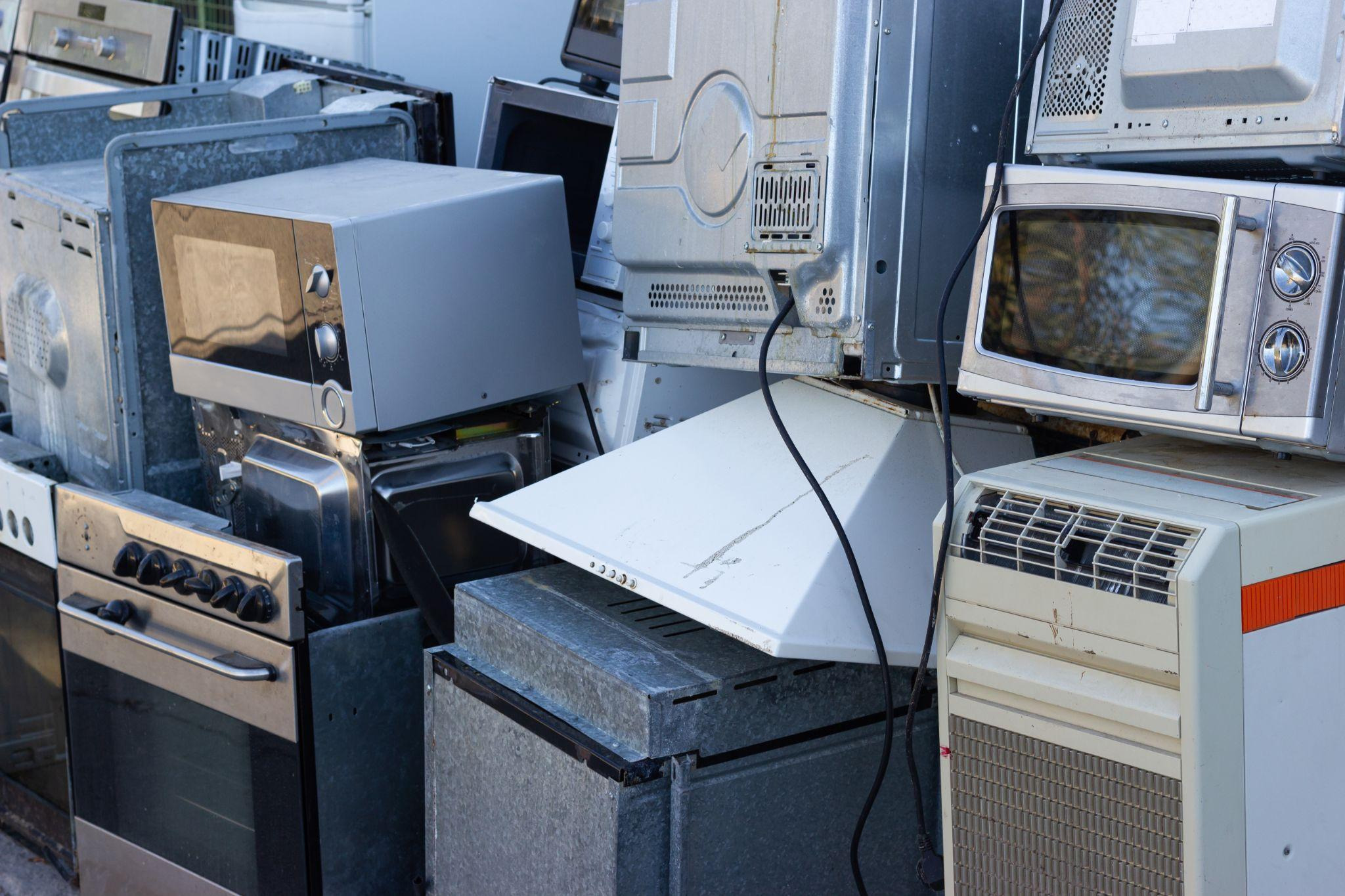
You unplug the old laptop, toss it in a drawer for two years “just in case,” and eventually it ends up in a garbage bag on trash day. Multiply that by a household, then by a city, and you start to see a problem most people never think about twice: where does all of it actually go?
The short answer is: not where you’d expect, and not always where it should.
The Journey Starts Long Before the Landfill
Electronics don’t decompose the way food scraps or paper do. A phone, a printer, or a microwave is really a small warehouse of raw materials — copper wiring, aluminum casing, steel brackets, circuit boards laced with gold and silver in trace amounts, and sometimes lead or mercury that needs to be handled carefully rather than buried.
Sorting and Stripping
When electronics are processed correctly, the first step is disassembly. Batteries are pulled out separately because of fire risk. Plastic housings are separated from metal internals. Circuit boards are set aside for specialized processors who can recover the precious metals inside them. It’s slow, manual work in most facilities, even with modern shredding technology involved.
Where the Metal Goes
Once separated, the metal doesn’t just disappear — it re-enters the supply chain. Steel and aluminum get melted down and resold to manufacturers who need raw material for everything from car parts to construction beams. This is the part most people never see: the phone charger you tossed out could, months later, be part of a steel beam in a building across town.
Why E-Waste Is a Bigger Problem Than It Looks
Electronic waste is one of the fastest-growing waste categories in the world, and most of it still isn’t processed properly. A large share of discarded electronics globally is never formally collected or recycled at all — it ends up in general landfill waste or is exported informally, where it’s dismantled in less controlled conditions.
That matters for two reasons. First, valuable materials that could be reused are lost permanently, which means more raw mining to replace them. Second, materials like lead, cadmium, and mercury in older devices can leach into soil and groundwater when they’re not disposed of properly.
The Hidden Value Inside a Broken Laptop
Here’s the part that surprises most people: a device that looks completely dead can still be worth money. Scrap processors don’t care whether your laptop turns on — they care about the copper in the motherboard, the aluminum in the chassis, and the steel in the hard drive casing. Even things like old extension cords, box fans, and broken microwaves have resale value once separated into their base materials.
This is why “throwing something away” and “recycling something” are two very different outcomes for the same object. One buries value in the ground. The other keeps it circulating.
What You Can Actually Do With Old Electronics
A few realistic options exist depending on the item and its condition:
- Manufacturer take-back programs – many electronics brands will accept old devices, sometimes with a small credit toward a new purchase.
- Municipal e-waste collection days – most cities run periodic drop-off events specifically for electronics, separate from regular garbage pickup.
- Donation – working devices can often go to schools, shelters, or refurbishing nonprofits before they’re written off as scrap.
- Local scrap and metal recycling yards – for larger or non-working items, community scrap yards are often the most practical option, since they’re set up to separate and process metal at scale.
A Local Example of How This Works Day to Day
In cities with long-established scrap industries, this process has been quietly running for generations. In Toronto, for instance, Canada Iron & Metal has been sorting ferrous and non-ferrous metal, along with electronic scrap, since the 1930s — a reminder that this isn’t a new trend so much as an old system that’s finally getting more public attention as e-waste volumes climb.
Frequently Asked Questions
Is it illegal to throw electronics in the regular trash? It depends on your municipality. Many cities and provinces restrict or outright ban putting electronics in curbside garbage because of the hazardous materials inside them, though enforcement varies widely by region.
Do scrap yards actually pay for old electronics? Often, yes — particularly for items with recoverable metal content, like wiring, motors, and appliance casings. Payment is usually based on weight and material type rather than whether the device still functions.
What’s the real difference between recycling and just discarding e-waste? Discarding sends the item to a landfill as-is. Recycling breaks it down into base materials — metal, plastic, glass — so those materials can be reused in manufacturing instead of newly mined or extracted.
How much e-waste actually gets recycled properly? Global estimates suggest a large majority of e-waste is still not formally documented or recycled, according to the Global E-waste Monitor produced by UN-affiliated researchers, which tracks e-waste generation and recycling rates worldwide.
The Bottom Line
Most people never think past the moment they close the trash can lid. But every discarded device carries a second life inside it — one that either gets recovered through proper recycling or lost permanently in a landfill. The infrastructure to do this the right way already exists in most cities, from manufacturer programs to long-running local scrap operations. The only missing piece, most of the time, is simply knowing it’s there.
For more detail on safe disposal guidelines, the U.S. Environmental Protection Agency’s electronics recycling page outlines what materials require special handling and why.





Be First to Comment