Operational efficiency of an online business requires flawless data processing. The ability to process a large number of day-to-day transactions directly affects the level of client service. This task is ensured by an online transaction processing system (OLTP).
By reading this article, market participants will be able to understand exactly how OLTP affects the quality of a business’s operations, how to choose a system, and what to pay attention to.
What Is Online Transaction Processing (OLTP)?
Online Transaction Processing (OLTP) is a technology that processes numerous short operations in real time. Each action is recorded as a separate transaction. When data must be updated instantly and without errors, OLTP is used. The system responds to each action immediately, so users see up-to-date information.
How a Transaction Works in Modern Commerce
OLTP refers to online data processing systems and financial transaction systems that process many short operations. OLTP systems are designed so that each real-time transaction consumes minimal time and resources.
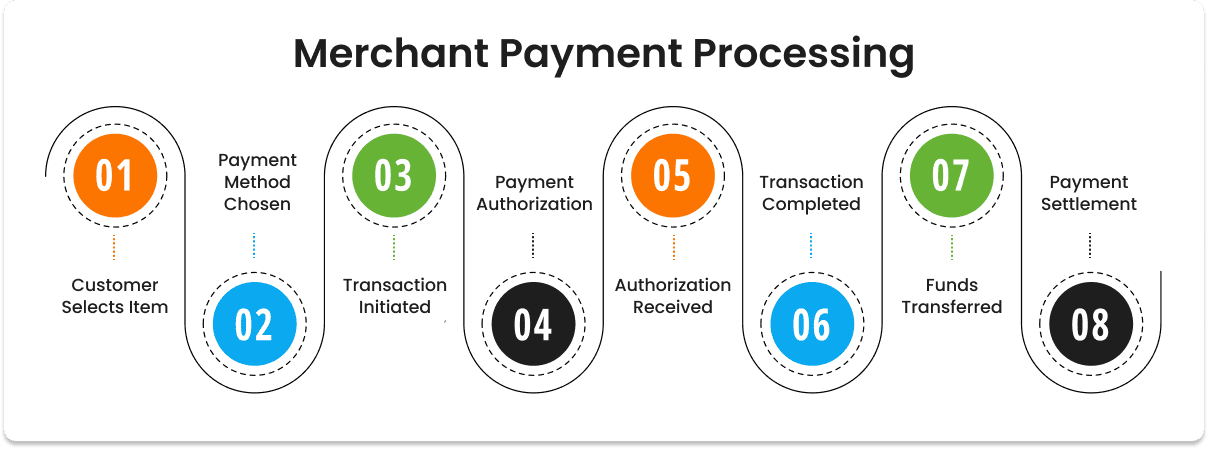
To see the structure of operation, it is convenient to lay out the steps:
- The type of data processing
OLTP belongs to the type of data processing where the system continuously performs online database transactions. Each client action is converted into a separate transaction that changes the state of the operational database, therefore OLTP systems modify data.
- Capture and validation of transaction data
When a request arrives, the system receives the transaction data and performs basic checks of format, limits, and access rights. At this stage, transaction management is triggered, which ensures the data pass all checks before being committed.
- Applied use cases
The same pattern is used in online banking and e-commerce, as well as in reservation systems. In each case, the system executes similar online database transactions.
- Parallel operation and data integrity
An OLTP platform processes many requests simultaneously. Transaction management controls operation ordering and row locks to preserve data integrity. If two operations attempt to modify the same object, the system coordinates ordering, rolls back conflicting transactions, or waits for the resource to be released.
- Completion of the operation and commit of the result
When the user has finished processing and all checks have passed, the system confirms the real-time transaction and writes the changes to the database. After that, other services can use the updated data, and the transaction is considered complete and no longer available for partial modification.
Another point concerns the link between the payment gateway and OLTP. The gateway delivers payment messages quickly and securely, and OLTP turns these messages into reliable data changes.
When both components are configured in concert, checkout stays fast and transactional records remain accurate. This is largely the approach followed by Paykassma.
Thus OLTP systems modify data in real time, supporting stable operation of online data processing systems and application services.
Why Merchants Rely on Transactional Data
Merchants rely on transaction data because these records show what is actually happening in the business. When payments, refunds, or bookings pass through the system, each entry goes into a data store and forms a history of client behaviour, revealing sales dynamics. Without this information it is hard to see which products work and which do not.
When a business accumulates more data, the analysis can go beyond basic statistics. This corpus moves to a data warehouse, where the data are structured and prepared for analysis. At this level analytical tools operate:
- complex queries;
- expanded reporting;
- period comparisons;
- pattern detection.
Analytics turns transactions into meaningful conclusions. When the system notices a dip in a specific category or rising demand on a particular day of the week, business intelligence helps explain the reasons and choose a strategy. It is useful that analytical models can detect unusual patterns such as spikes in declines or suspicious activity.
For merchants, transactional data serve several roles at once: they show the real state of the business, support sales scaling, raise forecast accuracy, and aid operational decisions. In this way, data from an ordinary data store gradually become the foundation for business intelligence.
Key Features of an OLTP System
Relational Database System Foundations
OLTP is built on a relational database management system because such a system executes database transactions predictably and preserves data integrity. In real operations this matters, since transactions constantly modify the data store, and any error immediately affects operations.
When requests run in parallel, concurrency arises. A large number of concurrent users send requests at the same time, so it is important to know the actual number of concurrent users the system can sustain.
In practice, OLTP often runs on an enterprise SQL database such as Microsoft SQL Server. These platforms manage transactions, locks, and the log so that changes remain consistent.
The upper layer of the application contains business logic. It determines how the operation proceeds. The business logic tier triggers validation, then sends a command to the DBMS. After that the transaction is committed to the data store.
Typical OLTP Workload and Performance Needs
These are constant short operations in real time. Each must execute quickly, therefore stable response times and low latency are important.
The system processes a large stream of operations. This stream is called throughput. It shows how many transactions per second processing systems can sustain without failures.
When the number of concurrent users grows, the level of concurrency rises as well. Some transactions read a table, others try to modify it, therefore each query must execute without conflicts. If locks accumulate, the system starts to slow down.
When the load increases, engineers move to scaling OLTP. This can be an increase in resources or a change in architecture.
How OLTP Supports Daily Business Transactions
Examples from Retail, E-Commerce, and Payments
In various industries, online transactional processing is used as a basic mechanism for fast operations. Any environment where data change every second relies on an online transaction processing system. In such scenarios, the system records the action, verifies its correctness, and updates the operational tables so that other processes immediately see the new state.
In retail, OLTP operates when the point-of-sale updates inventory, records the sale, and writes off the item at the moment the client completes payment. In e-commerce the mechanism is the same: an order is created, the status changes, the payment is verified, and the data flow into the warehouse system. This is the case where examples of OLTP systems are order-processing platforms, shopping carts, internal inventory services, and payment confirmation.
In the payments sphere, OLTP is used in financial transaction systems, where each operation must pass balance checks, limits, and card status. The same principles ensure stable operation of online banking, because the system must update the balance after a transfer, record the payment, and write the transaction history without delay.
In reservation, OLTP forms the foundation of online reservation systems. When a client selects a seat, the system holds it, checks availability, and records the booking. If requests arrive simultaneously, OLTP applications prevent double booking and preserve schedule correctness.
Common Bottlenecks and How OLTP Solves Them
Most issues stem from competing requests, resource shortages, and incorrect transaction structure. The main points are:
- High contention on hot rows and tables, when many transactions attempt to modify the same records at the same time.
- Long-running queries in the OLTP cluster, which block short operations and increase wait time.
- Insufficient OLTP scaling, where growth in users and transactions is not matched by a review of architecture and resources.
- Poor index and schema design, so any read or write operation triggers excessive scanning.
- Oversized transactions that hold locks for too long and cause lock chains and deadlocks.
- Uncontrolled schema changes, when improvements to the OLTP system modify data structures in a way that raises contention and reduces performance.
If these factors are ignored, the workflow begins to slow down and creates delays across stages.
OLTP vs OLAP: What Merchants Should Understand
Processing large volumes of historical data to obtain totals, aggregates, and analytical insights is called OLAP. This model is used for tasks where trends, forecasting, and a comprehensive view of the data matter to the business. OLAP helps reveal client behaviour over long periods, evaluate campaign effectiveness, form metrics for business intelligence, and support decisions that require deep analytical context.
Differences in Data Models and Workloads
OLTP and OLAP systems address different tasks and use different data structures. OLTP focuses on fast transactions and updates, while online analytical processing works with large volumes of historical data, produces reports, and supports business intelligence.
The difference becomes even clearer when presented in a table:
| Characteristic | OLTP | OLAP |
| Primary purpose | Fast data updates and recording operations in real time | Deep data analysis, work with large samples |
| Data type | Current operational records in the data store | Historical data in the data warehouse |
| Structure | Normalised tables to minimise duplication | Denormalised schemas to speed up reads |
| Workload | Short transactions, many small operations | Heavy analytical queries and aggregation |
| Queries | Simple modifications | Complex analytical queries and multi-step selections |
| Examples | Payment services, reservations, online retail | Reporting, forecasting, analytics, BI calculations |
| Core processing systems | Transactional engines | OLAP databases and analytics platforms |
When to Use OLTP vs OLAP
OLTP is appropriate where the speed of committing changes is critical. OLAP is applied when the business requires insights, forecasts, and an aggregated picture.
| Scenario | OLTP fits | OLAP fits |
| Real-time order processing | Yes | No |
| Payment transactions and authorisations | Yes | No |
| Real-time personalisation based on immediate data | Yes | No |
| Quarterly sales analysis | No | Yes |
| Work with large sets of historical data | No | Yes |
| Building reports | No | Yes |
| Storing aggregated data in a data warehouse | No | Yes |
| Long analytical cycles and complex analytics tasks | No | Yes |
Choosing the Right OLTP System for Your Business
When the task is to build a transactional platform, a mistake at the core selection stage becomes costly later. Priorities are defined first: stability, scalability, transparency of management, and total cost of ownership. Only after that is a specific technology chosen.
Criteria for Selecting a Reliable Database System
When selecting a database for OLTP, it is important to quickly filter out options that will not withstand the production workload and business growth. Briefly, the criteria reduce to the following set.
- Predictable performance under peak transaction load
- Strong guarantees of data integrity always
- Mature tooling, monitoring, backup mechanisms
- Reasonable total cost of ownership
- Solid ecosystem of skills and experts
When these basics are in place, the OLTP platform gains a stable foundation, and the team can focus on business logic rather than constant firefighting in the transactional layer.
SQL (Relational) vs NoSQL Options for Merchants
For classic financial and operational scenarios, a relational platform most often remains the default choice. A relational SQL engine with a transactional model and strict constraints usually delivers efficient OLTP, clear behavior, and predictable performance under load. This architecture fits cases where balance consistency, the history of operations, and transparent data update rules are critical.
A NoSQL approach is useful where the schema changes frequently and the structure of events is not fully defined. In the end, the choice often rests on priorities: the relational core provides controlled consistency and predictable throughput, while non-relational stores add elasticity and scale. A combination of both approaches allows one to optimize the architecture.





Be First to Comment