Blood tests that check for inflammation form part of many routine health assessments and one of the oldest and most widely used markers is still ordered every day across India. Whether the concern is unexplained fever, joint pain or monitoring a chronic condition, this simple blood investigation offers a first-line clue about what might be happening in the body. The ESR or Sed rate test is affordable, widely available and interpreted alongside symptoms and other tests to guide the next steps in care. Understanding how the test is performed, what it typically costs in India and when it is genuinely useful helps individuals make informed decisions about their health.
What Is the ESR Sed Rate Test?
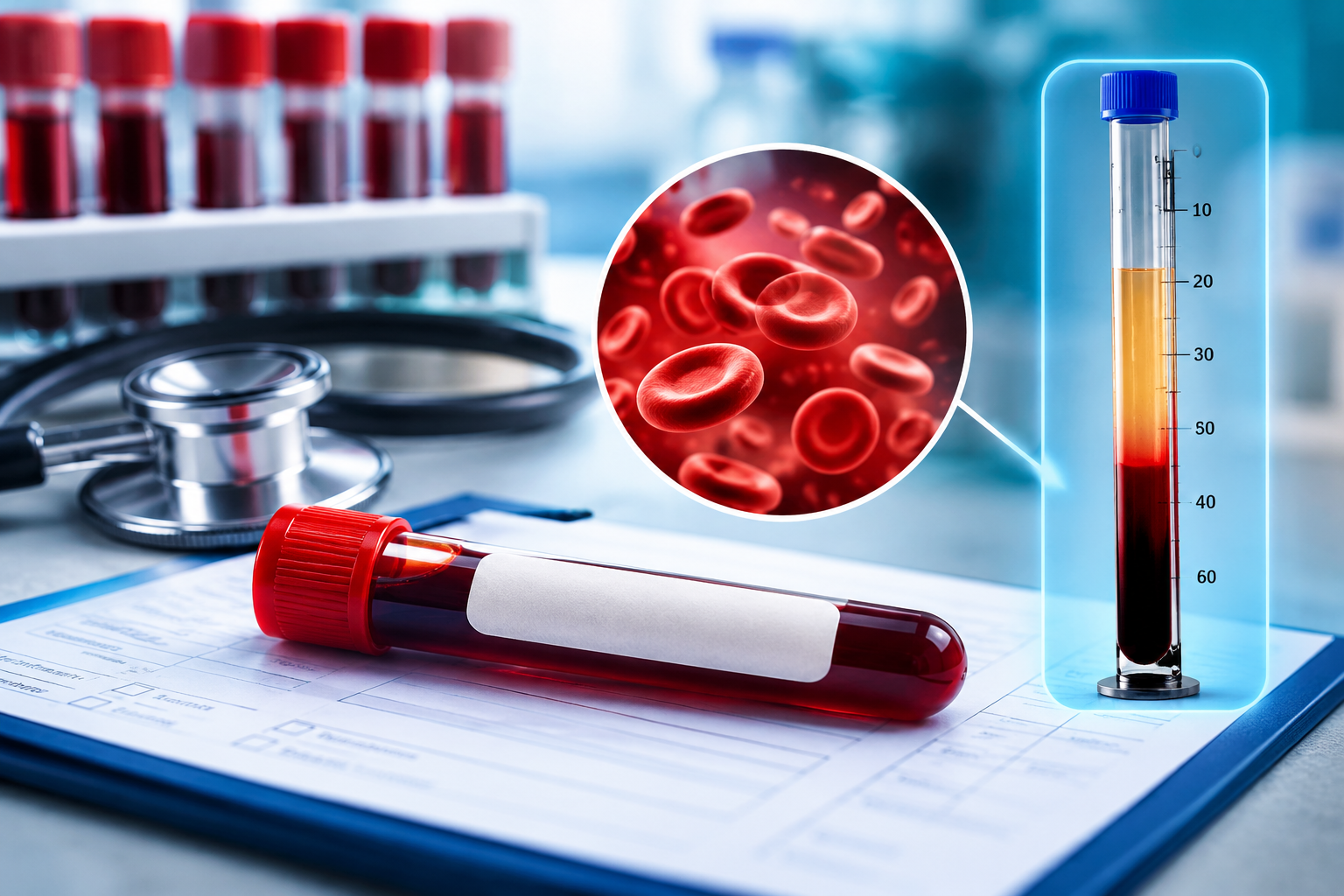
ESR Test stands for Erythrocyte Sedimentation Rate (ESR) Test, sometimes shortened to “sed rate” in clinical use. It measures how quickly red blood cells fall to the bottom of a vertical tube of anticoagulated blood over one hour. During inflammation, certain proteins cause red blood cells to stick together and settle more quickly.
The ESR or Sed rate test is a general marker of inflammation. It does not diagnose any specific condition on its own, but tells doctors whether inflammation is likely and whether further investigation is needed.
Procedure Step by Step
The procedure is straightforward and completed in a single visit:
1. Sample Collection
A trained phlebotomist draws venous blood from the arm, usually around 2 to 4 mL, into a tube containing an anticoagulant such as sodium citrate.
2. Loading the Tube
The blood is transferred into a Westergren tube, which is 200 mm long and calibrated at every millimetre.
3. Vertical Positioning
The tube is placed upright in a rack, in an area protected from vibration, direct sunlight and temperature changes.
4. One-Hour Wait
The red cells are allowed to settle undisturbed for exactly 60 minutes.
5. Reading the Result
The distance in millimetres from the top of the plasma column to the top of the settled red cells is recorded and reported as mm/hour.
Automated analysers now perform the same measurement faster and with better reproducibility and are used by most modern laboratories in India.
Preparation Before the Test
No special preparation is generally required. However, patients should share the following information with the laboratory or their doctor:
- Current medications, including hormonal treatments and steroids
- Recent vaccinations or infections
- Pregnancy or menstruation
- Known autoimmune or chronic conditions
- Recent surgery or significant injury
These factors can influence the reading and help doctors interpret the result more accurately. Fasting is generally not required for an ESR test unless it is being performed alongside other blood tests that require fasting. Follow your doctor’s or laboratory’s instructions before the test.
Cost of the ESR Test in India
The ESR test remains one of the most affordable blood investigations available in India. Prices vary by city, laboratory and whether the test is done alone or as part of a broader panel.
- Standalone ESR test: Usually between INR 100 and INR 300
- As part of a complete blood count (CBC) with ESR: Around INR 300 to INR 600
- As part of a fever or inflammation panel: Typically INR 800 to INR 1,500 depending on tests included
Home sample collection is now widely available, often at no extra charge from established diagnostic chains.
When Should You Get Tested?
Doctors typically recommend an ESR test in the following situations:
- Persistent fever: Especially if it lasts more than a few days without a clear cause
- Unexplained joint pain or stiffness: Particularly morning stiffness lasting over 30 minutes, joint pain or swelling
- Suspected autoimmune conditions: Such as rheumatoid arthritis, lupus or polymyalgia rheumatica
- Chronic fatigue or general unwellness: Without an obvious explanation
- Unexplained weight loss: Especially in older adults
- Monitoring known inflammatory disease: To track how active the condition is
- Evaluating certain inflammatory conditions: Doctors may also request an ESR test when investigating persistent infections, temporal arteritis (giant cell arteritis) or polymyalgia rheumatica
The test is not recommended as a routine screen in healthy individuals with no symptoms, as mildly abnormal values are common and can cause unnecessary worry.
Understanding the Results
Reference ranges vary by age and gender. Typical adult values are:
- Men under 50: Up to 15 mm/hour
- Men over 50: Up to 20 mm/hour
- Women under 50: Up to 20 mm/hour
- Women over 50: Up to 30 mm/hour
Higher ESR values may suggest inflammation but do not identify its cause. Raised ESR levels may be associated with infections, autoimmune diseases, chronic inflammatory conditions and certain cancers. However, ESR levels can also be influenced by factors such as age, sex, pregnancy and anaemia.
ESR may be elevated in some cancers, however, it is not a test used to detect or diagnose cancer. Additional investigations are needed to identify the underlying cause of a raised ESR. The results should always be interpreted in the context of a person’s symptoms, medical history and other laboratory findings.
Combining ESR With Other Tests
ESR is most useful when read alongside C-Reactive Protein (CRP) and clinical assessment. CRP rises faster and falls quickly, while ESR responds more slowly. Together they give a clearer picture of both acute and chronic inflammation. A complete blood count, thyroid function and specific autoimmune markers may also be added depending on the suspected cause.
Choosing a Reliable Diagnostic Partner
Accurate ESR results depend on proper sample collection, handling and analysis. Choosing a laboratory that follows recognised quality standards helps ensure reliable results. Lupin Diagnostics offers ESR, CRP and comprehensive inflammation panels across India through its National Accreditation Board for Testing and Calibration Laboratories (NABL) accredited labs, with free home sample collection available in major cities.
Final Thoughts
The ESR or Sed rate test remains a simple, affordable and widely useful blood investigation for detecting inflammation and guiding further care. It works best when the timing matches the clinical picture and when interpreted alongside other tests. If your doctor recommends an ESR test based on your symptoms or medical history, having the test performed at a quality-assured laboratory can support appropriate clinical evaluation.




Be First to Comment