Building an investment plan can be a daunting task considering the amount of money that we might have to save, spend, and invest on a monthly basis. It is simple to stick to a budget if you use the 50 30 20 rule, a rule of thumb that helps you categorise your expenses.
The rule of thumb can act as a guiding light to maintain your expenditure and help you achieve your financial goals.
What is the 50 30 20 rule?
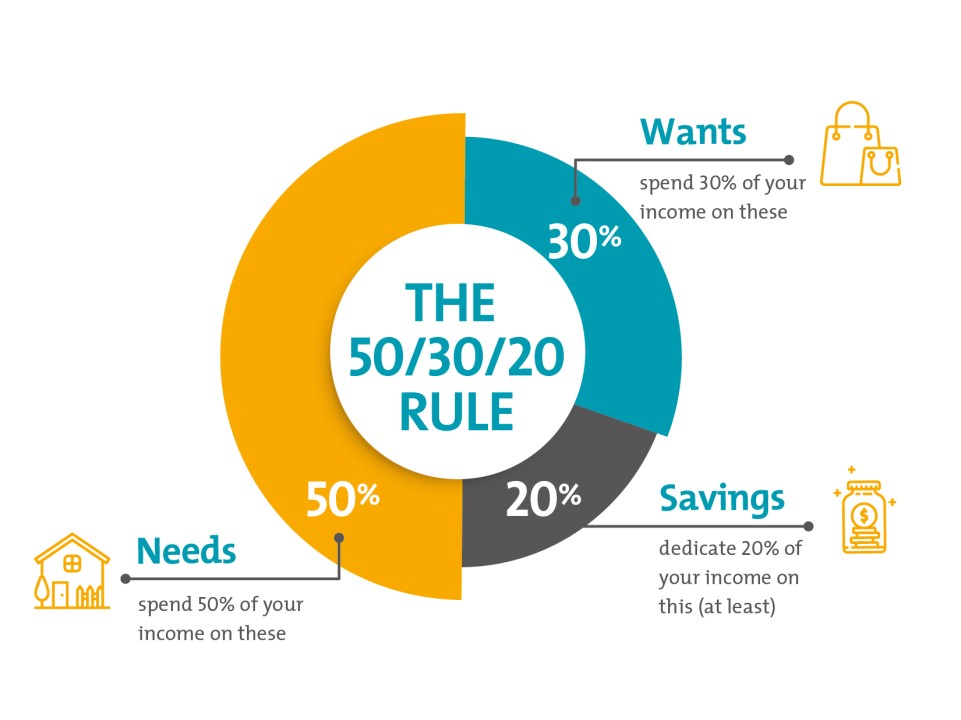
The 50 30 20 rule is a principle that suggests dividing your monthly income into three categories: needs, wants, and savings. 50% of your income should go into your needs, 30% should be spent on your wants, and 20% should be invested and saved.
The thumb rule makes it easier to track your finances and ensures that you have enough money to spend on your essential needs while allowing you to save enough money for your financial goals.
The 50 30 20 rule is a great rule to follow if you are looking to build a disciplined approach towards your finances.
Set the foundation for your investment plan with your income
The first step to building an investment plan is to understand your monthly take-home income.
Take, for example, your monthly income is ₹50,000. Now, according to the 50 30 20 rule, your income will be divided into the three categories: needs, wants, and savings.
- Needs – ₹25,000
- Wants – ₹15,000
- Savings – ₹10,000
Now, your income might not exactly match the figure mentioned above. You have to determine how much money you require every month to suffice your needs. Similarly, you also have to determine how much money you want to spend on your wants. Finally, you will determine how much money can be set aside for your long-term financial goals.
Keep 50% of the income for your needs
Firstly, you have to calculate your needs, the essential expenses that you have to pay to lead a comfortable lifestyle. Needs can include rent or home loan payment, groceries, electricity bill, school fees, transportation, health insurance, etc. Now, you must ensure that you spend no more than 50% of your income on your needs and wants. If your needs are higher than 50%, you must think about limiting your expenses so that you reduce the amount that you spend on your needs.
For example, you may start limiting your subscription services like Netflix or other streaming services.
This is not to suggest that you should avoid spending money on your needs, but rather you should spend money only on the necessary things that you need for living a comfortable lifestyle.
30% of the income can be spent on your wants
The first two categories of your expenditure needs and wants are essential to living a happy and comfortable lifestyle. Having a limit for spending on your wants is important to ensure that you do not overspend on luxuries. 30% of your income can be spent on your wants, including travel, eating out, entertainment, shopping, etc. Additionally, having money for your wants makes it easier to adhere to your investment plan. You will be aware of the amount that you spend on your wants and will know what amount you can invest every month.
For instance, if your monthly income is ₹50,000, you can spend approximately ₹15,000 on your wants. Since you will have a fixed budget for your wants, it will become easier to manage your expenditure, and you will also be able to save money for your future financial goals.
20% of the income should be invested for your future
The last category is your investment category; 20% of your income should be invested for your future financial goals. The money can be utilised towards making financial goals short-term goals, long-term goals, retirement corpus, emergency fund, etc. Before you start investing, it is essential to build an emergency fund that can cover at least 6 months of your expenses.
Additionally, it is important to understand that building an emergency fund will help you avoid liquidating your investments during financial emergencies. Once you have an emergency fund, you can consider channeling more money towards your investment category.
Now, when you start investing, it is important to remember to choose the right investment options according to your risk appetite, financial goals, and tenure. You can choose to invest in different financial products like mutual funds, fixed deposits, bonds, pension plans, etc. Do not invest blindly; invest only in financial products that you understand and that are suitable for your financial needs and requirements.
Your investments should be aligned with your goals and income
You must understand that your investment goals should be realistic and must be in sync with your current financial status and income.
For instance, when it comes to short-term financial goals, it is advisable to park your money in short-term investment plans that will help you generate stable returns. When it comes to long-term financial goals, you can choose to invest in market-linked instruments like mutual funds and stocks, considering you will have enough time to ride out market fluctuations. In addition, you can have multiple financial goals, one for your retirement corpus, one for your daughter’s education, and so on.
By setting your financial goals, you can determine how much money you need to invest each month to be able to achieve your goals.
Continue to invest until you reach your goals
You must continue to invest every month, and as soon as your salary increases, you must also increase the amount that you invest. For example, if your salary increases from ₹50,000 to ₹60,000, you must increase the amount that you invest accordingly.
If you increase the amount that you invest by 5%, your total investment amount every year will be much higher than what you would have been investing every year if you had increased your salary by the same percentage. Additionally, instead of investing every month, you can also consider reviewing your investment portfolio every six months to ensure that you are on track to meet your financial goals.
What if I am not able to adhere to the 20% savings/investment category?
In case you do not find it feasible to invest 20% of your income due to high expenses, you can start by investing a lesser amount. You can start by investing 10% of your income towards your financial goals. You will eventually be able to increase the percentage once your income increases or your expenses decrease. You can also look to increase the amount invested every month by making small adjustments to your lifestyle or by earning an extra source of income.
Moreover, you must remember to make smart decisions while managing your finances and must not overextend your finances so that you can continue to adhere to the principles mentioned by the 50 30 20 rule.
Modifying the thumb rule according to your requirements
It is essential to keep in mind that the 50 30 20 rule is just a rule of thumb.
You must understand that everyone’s financial requirements are different. Some people earn a lot and barely spend anything, while some people earn less but spend more. You must adjust the thumb rule according to your requirements.
For example, if you have a steady income and fewer expenses, you can start by investing more than 20% of your income towards your financial goals. On the contrary, if you have a lot of expenses and/or liabilities, you may find it difficult to invest 20% and may need to cut back on your expenses so that you can start saving and investing.
The 50 30 20 rule can help create a disciplined approach to your finances, considering that it is based on simple calculations. It enables you to have a realistic approach towards your finances and helps you avoid overspending or underspending.





Be First to Comment