You have spent months trying serums, oils, and over-the-counter shampoos, yet the hairline in your mirror looks exactly the same. That frustration is common, and it usually comes down to one mistake: picking a treatment before understanding why your hair is actually falling. This article breaks down the science behind modern hair regrowth options, including a closer look at recent comparative data, so you can choose one that works for your specific case rather than the one with the loudest marketing.
Understanding Why Hair Loss Treatments Fail
Most people try a treatment for a few weeks, see no change, and switch to something else entirely. This cycle repeats for years because hair regrowth is a biological process, not an overnight fix. Consequently, follicles need consistent stimulation over several months before visible density improves.
The Root Cause Problem
Hair loss has several distinct triggers, including androgenetic alopecia, nutritional deficiency, thyroid imbalance, and chronic stress. A treatment built for one cause rarely helps another, which is why a proper diagnosis should always come before any regrowth plan. To implement this correctly, it also helps to rule out a scalp condition rather than a hair-cycle issue in the first place; this scalp-versus-dandruff breakdown is a useful starting point before assuming the problem is purely follicular.
The Science-Backed Options Worth Considering
Once the cause is clear, the treatment choice becomes far more logical. Below are the options currently backed by clinical research rather than social media trends.
Growth Factor Concentrate (GFC) Therapy
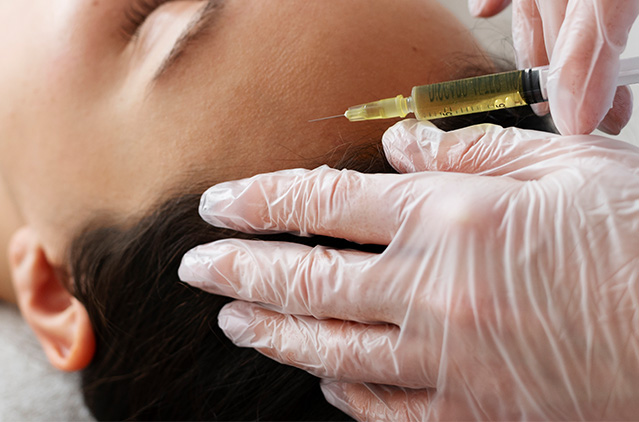
GFC treatment has gained attention because it isolates growth factors from the patient’s own blood without the platelet debris found in older methods. While drafting this piece, I cross-checked Kosmoderma clinical notes on GFC against the published literature with Dr. Nishtha, our Medical Head, and a 2023 retrospective comparison of 42 patients is a useful reference point: it found GFC produced measurably better total hair count and physician-rated improvement scores than standard PRP by the second session. That gap matters for a practical reason: it means patients often see visible change sooner with GFC, which is precisely the early feedback that keeps people committed to finishing a full treatment course instead of quitting after one session.
For anyone comparing a GFC treatment in Bangalore against other regenerative options, the appeal lies in this purity and the reduced inflammation response after injection.
How the Procedure Typically Works
- A small blood sample is drawn and processed to isolate growth factor proteins.
- The concentrate is injected into the scalp at the level of the hair follicles.
- Sessions are usually spaced three to four weeks apart, with a 2024 single-arm clinical study showing measurable density improvement as early as three months in.
- Maintenance sessions are scheduled every six months once density stabilizes.
PRP vs GFC: What the Comparative Data Actually Shows
Most consumer articles frame this as a simple upgrade story, GFC replacing PRP outright, but the same 2023 retrospective comparison complicates that narrative. GFC pulled ahead on hair count and short-term improvement scores, yet at the six-month mark, PRP patients showed better sustained hair diameter and aesthetic scores (International Journal of Research in Dermatology). In other words, the honest answer is not “GFC is better,” it is that GFC front-loads results while PRP holds them longer, which is why several clinics now sequence the two rather than picking one over the other.
Medical and Topical Options
Not everyone needs an in-clinic procedure right away. Minoxidil remains one of the most studied topical treatments, and finasteride continues to show strong results for androgenetic alopecia in men. Consequently, many dermatologists recommend combining these medical options with in-clinic therapies for a layered approach rather than relying on either alone.
What Makes a Hair Regrowth Treatment Actually Work
Choosing the right category of treatment is only half the equation. The other half is how well it is matched to your individual hair loss pattern and how disciplined you are about following through.
Personalization Based on Hair Loss Stage
Early-stage thinning responds differently from advanced patchy loss. A patient in the early stages may see strong results from topical treatments alone, while someone with visible scalp exposure often needs a combination of regenerative therapy and medical support. Getting this staging wrong is one of the most common reasons a treatment appears to “not work.”
Consistency and Realistic Timelines
Hair growth cycles move slowly, and no legitimate treatment shows dramatic change within a month. A 2024 single-centre study on concentrated growth factors followed patients for months before confirming significant density gains, not weeks (PubMed, National Library of Medicine). Anyone promising results faster than that timeline is worth treating with scepticism.
Choosing a Clinic: What to Look For
The treatment matters, but so does the hands administering it. Look for a clinic with dermatologist-led protocols, transparent before-and-after documentation, and a willingness to explain why a specific therapy suits your case rather than upselling a package. This is also where understanding what makes skincare genuinely clinical is worth reading alongside your hair-loss research, since the same due-diligence questions apply to both.
If you are researching the best hair loss treatment in Bangalore, prioritize clinics that offer a proper diagnostic consultation before recommending any procedure; Kosmoderma GFC therapy overview is one example of how that consultation-first approach is typically laid out.
Key Takeaways
- Diagnose the root cause of hair loss, and rule out scalp conditions, before selecting a treatment.
- GFC therapy shows faster early gains than PRP, while PRP holds its results longer; sequencing both is increasingly common.
- Topical and oral medical options often work best when combined with in-clinic procedures.
- Realistic, months-long timelines matter more than dramatic before-and-after promises.
What has your experience been with regenerative hair treatments, and how long did it take before you noticed real change?



Be First to Comment