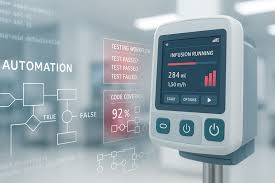
Medical devices are no longer limited to mechanical tools, implants, or standalone equipment. Today, many devices rely on software to collect data, guide clinical decisions, monitor patient conditions, control hardware functions, or connect with hospital systems. From imaging platforms and infusion pumps to wearable monitors and diagnostic applications, software has become a core part of how medical technology works.
That shift has created new opportunities, but also new responsibilities. When software is involved in patient care, quality, safety, and compliance cannot be treated as afterthoughts. They need to be built into the development process from the beginning.
The Growing Role of Software in Medical Devices
Software now supports many different functions across the medical device industry. Some systems use software to control device operation, while others use it to process clinical data, manage connectivity, or support healthcare professionals with decision-making.
This includes areas such as:
- Patient monitoring systems
- Diagnostic imaging equipment
- Connected wearable devices
- Mobile medical applications
- Clinical decision support tools
- Laboratory and testing equipment
- Software as a Medical Device, often called SaMD
As devices become more connected and data-driven, the software behind them becomes more complex. A small coding issue, poor requirement definition, or weak testing process can affect usability, performance, cybersecurity, and even patient safety.
That is why regulated software development requires a structured approach.
Why Medical Device Software Needs a Different Development Process
Developing software for a medical device is not the same as building a regular consumer app. Medical software must meet strict regulatory expectations because it may directly or indirectly affect patient outcomes.
A general software team may focus mainly on speed, features, and user experience. In the medical device space, those things still matter, but they must be balanced with risk management, traceability, documentation, verification, and validation.
A strong development process usually includes:
- Clear software requirements
- Risk-based planning
- Architecture and design documentation
- Version control and change management
- Verification and validation testing
- Cybersecurity considerations
- Usability and human factors review
- Ongoing maintenance and post-market monitoring
These steps help ensure that the software performs as intended and that potential hazards are identified before the product reaches users.
For teams that want a deeper overview of this process, this guide to medical device software development explains how IEC 62304 fits into the broader development lifecycle.
The Importance of IEC 62304
IEC 62304 is one of the key standards used for medical device software lifecycle processes. It provides a framework for planning, developing, testing, maintaining, and controlling medical device software.
The standard does not simply tell teams to “write safe code.” Instead, it outlines a lifecycle approach that connects software development with risk management and quality systems.
One of the most important concepts in IEC 62304 is software safety classification. Software is classified based on the potential harm that could result from failure. The higher the risk, the more rigorous the development and documentation expectations become.
This helps companies apply the right level of control without treating every software component the same way.
Common Challenges in Medical Device Software Projects
Even experienced software teams can struggle when entering the regulated medical device space. The challenge is not only technical. It is also procedural.
One common issue is poor requirements management. If requirements are vague, incomplete, or not traceable, testing becomes harder and regulatory submissions become weaker.
Another challenge is underestimating documentation. In medical device development, documentation is not just administrative work. It is evidence that the product was built using a controlled, repeatable, and risk-aware process.
Teams may also struggle with change control. Software evolves quickly, but every change needs to be assessed for its impact on safety, performance, cybersecurity, and compliance.
These issues can delay development, increase costs, and create problems during audits or regulatory review.
Building Quality Into the Lifecycle
The most effective medical device companies do not wait until the end of development to think about quality. They build it into every stage of the lifecycle.
That starts with planning. Before code is written, teams should understand the intended use, user needs, regulatory pathway, software safety classification, and risk profile of the product.
From there, development should follow a controlled process where requirements, design, implementation, testing, and release activities are connected. Traceability is especially important because it shows how each requirement was implemented and verified.
Testing should also go beyond basic functionality. It should confirm that the software works under expected conditions, handles errors properly, supports safe use, and meets defined performance requirements.
Cybersecurity and Connected Medical Devices
As more medical devices connect to networks, cloud systems, mobile apps, and hospital infrastructure, cybersecurity has become a major part of software quality.
A connected device may handle sensitive patient data or interact with clinical workflows. If security is weak, the risks can include data exposure, unauthorized access, device malfunction, or service disruption.
Medical device manufacturers need to consider cybersecurity throughout the software lifecycle, including secure design, vulnerability management, authentication, encryption, update processes, and post-market monitoring.
This is especially important for devices that receive software updates after release. Each update must be controlled, tested, and documented to ensure it does not introduce new risks.
Why Early Planning Saves Time Later
Medical device software projects often become more difficult when compliance is treated as something to fix at the end. By that stage, missing documentation, unclear requirements, or weak testing evidence can be expensive to correct.
Early planning helps prevent those problems. When teams understand regulatory expectations from the start, they can design their workflow around them.
This does not mean slowing down innovation. In fact, a structured process often helps teams move more confidently because expectations are clear, responsibilities are defined, and decisions are documented.
Final Thoughts
Software is now one of the most important parts of modern medical devices. It improves functionality, connectivity, usability, and clinical value. But it also introduces risks that need to be managed carefully.
For manufacturers, startups, and development teams, the goal is not just to build software that works. The goal is to build software that is safe, reliable, traceable, maintainable, and ready for regulatory scrutiny.
A strong lifecycle process, supported by standards such as IEC 62304, gives teams the structure they need to develop medical device software responsibly and efficiently.




Be First to Comment